First In StayTOKYOGINZA · TSUKIJIGuest check-in
← Stories of the Enoden · 15 stations

EN06 / ENODEN STORIES

Enoshima Station

Popular

The blue of jellyfish, the red of the shrine, walking to Uomitei's seaside dining table

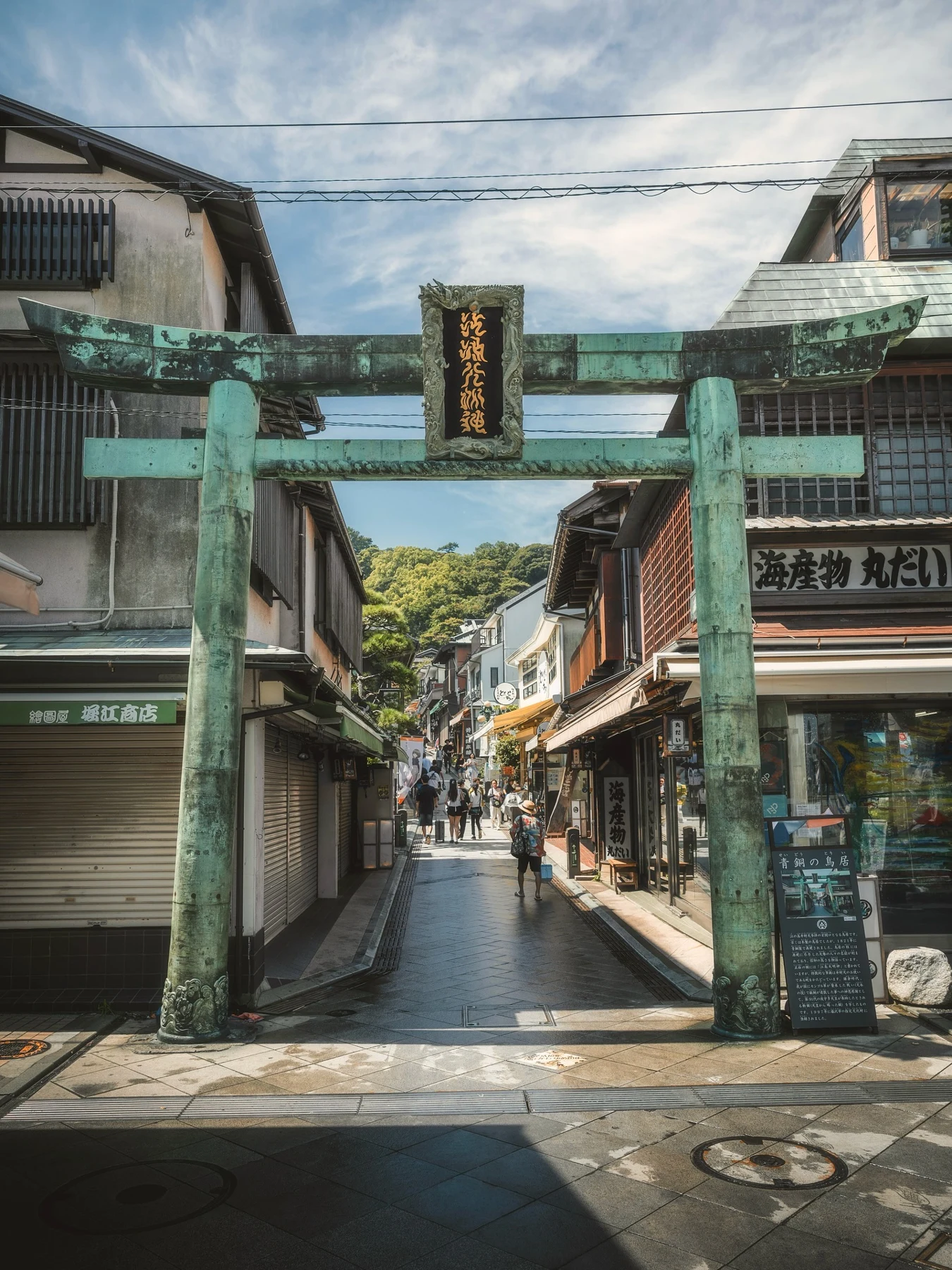
Enoshima’s bronze torii and Benzaiten Nakamise-dori
Photo and sourceEnoshima’s bronze torii and Benzaiten Nakamise-doriJunfei Chen · @junfei117 ↗

The blue of jellyfish, the red of the shrine, walking to Uomitei's seaside dining table

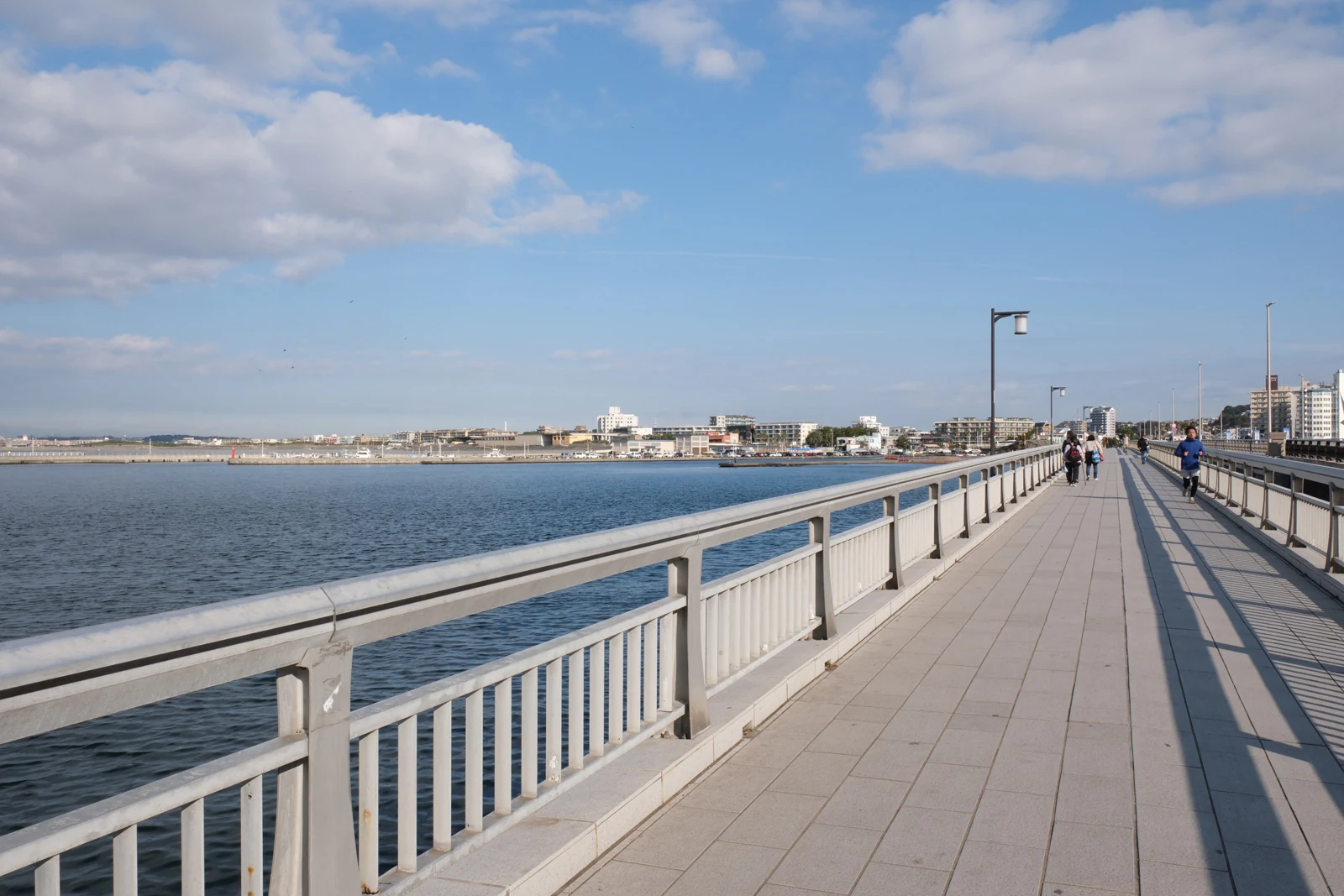
Enoshima has long drawn worshippers of Benzaiten. In the Edo period, pilgrims came from Fujisawa along the Enoshima pilgrimage road; today, the little train continues that journey. Enoden’s station is on the mainland in Katase, and the island is reached by walking through shopping streets and over the bridge. Temple visits and trains passing through town gradually give way to shrine steps, a garden and lighthouse, and rocky shores. Farther into the island, sea views and old legends unfold in greater depth.

THE STORY OF EN06

The blue of jellyfish, the red of the shrine, walking to Uomitei's seaside dining table

Walk through the shopping street into the island's belief

Enoden’s station is on the mainland in Katase; cross Benten Bridge to reach the island. Above Nakamise, Hetsunomiya, Nakatsunomiya, the summit garden and Okutsunomiya unfold along the hillside route. The three shrines together form Enoshima Shrine, adding a cultural thread to a leisurely island walk.

A seafood lunch in the deep part of the island

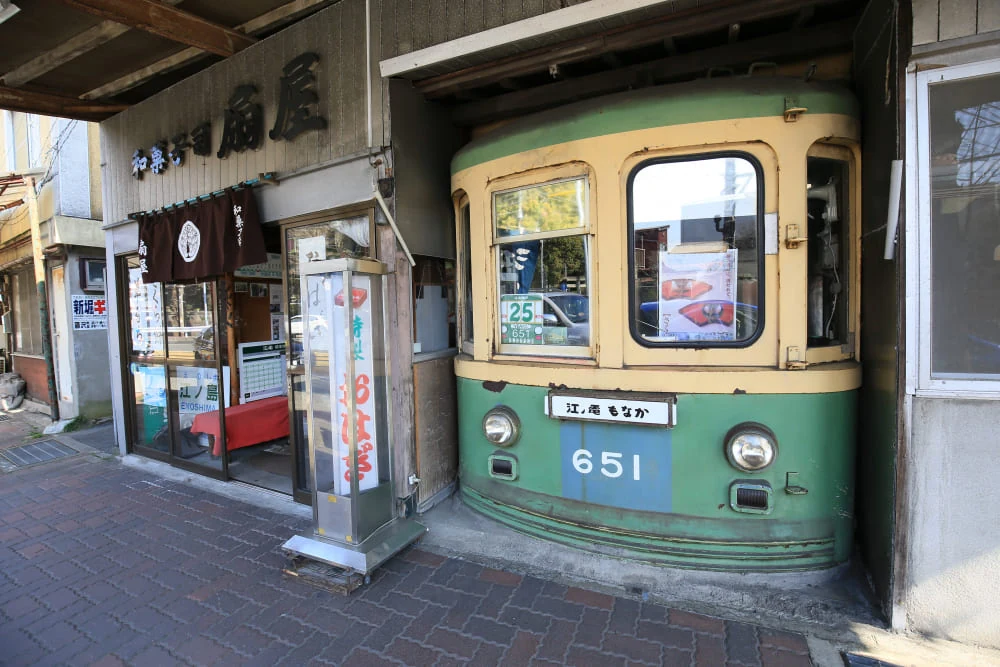
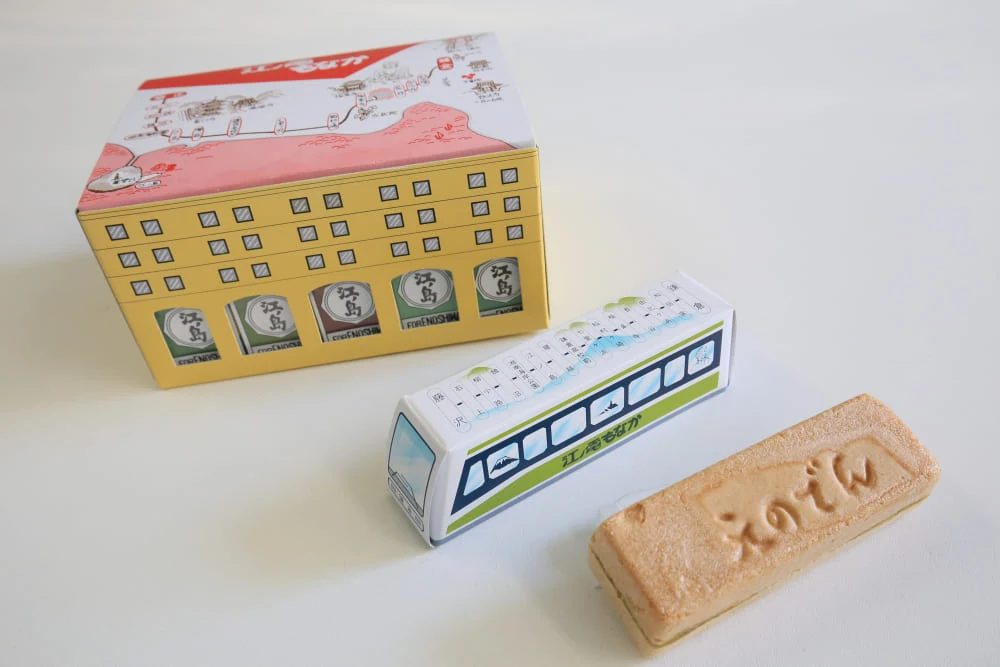
Uomitei lies beyond Okutsunomiya, above the steps toward the Iwaya Caves. Sea views, Enoshima-don and boiled-shirasu rice bowls are highlights here. After eating, continue to Chigogafuchi and the caves if your energy and sea conditions allow. Back on the mainland, buy Enoden monaka sweets at Ogiya as a souvenir of the railway.

Sources

EN06 / After crossing the bridge, it's just the beginning

Enoshima
Walk on to the island’s far, sea-facing side.

Enoshima’s old pilgrimage paths connect three shrines, hilltop gardens and wave-worn rocky shores. Allow at least half a day to explore at an easy pace. The Enoden station is in Katase on the mainland; the uphill walk begins after you cross the bridge onto the island. Continue over the summit and past Okutsunomiya for a sea-view lunch at Uomitei, the waves at Chigogafuchi and the legends of the Iwaya Caves.

First, take in the sea view and cuisine at Uomitei.
Enoshima’s bronze torii and Benzaiten Nakamise-dori
Enoshima’s bronze torii and Benzaiten Nakamise-doriJunfei Chen · @junfei117 ↗

AN ISLAND, ONE WALK AT A TIME

Find your bearings, then set off at your own pace.

Select a map number or place name to read about that stop. The entrance and spa are on the north side; Uomitei and the Iwaya Caves are on the western coast.

Schematic location map; thin lines mark walking paths. Follow the actual routes on site. © OpenStreetMap contributors · ODbL

It is recommended to spend 4–5 hours exploring the island; if including a hot spring bath, an additional 2–3 hours should be allocated. The aquarium is located on the land side, making it suitable to schedule for a half-day or alternatively, convert it into a full-day itinerary.

01 / Try sea food first, then decide when to go for a hot spring bath

At the island entrance, sea breezes mingle with warm, savory aromas.

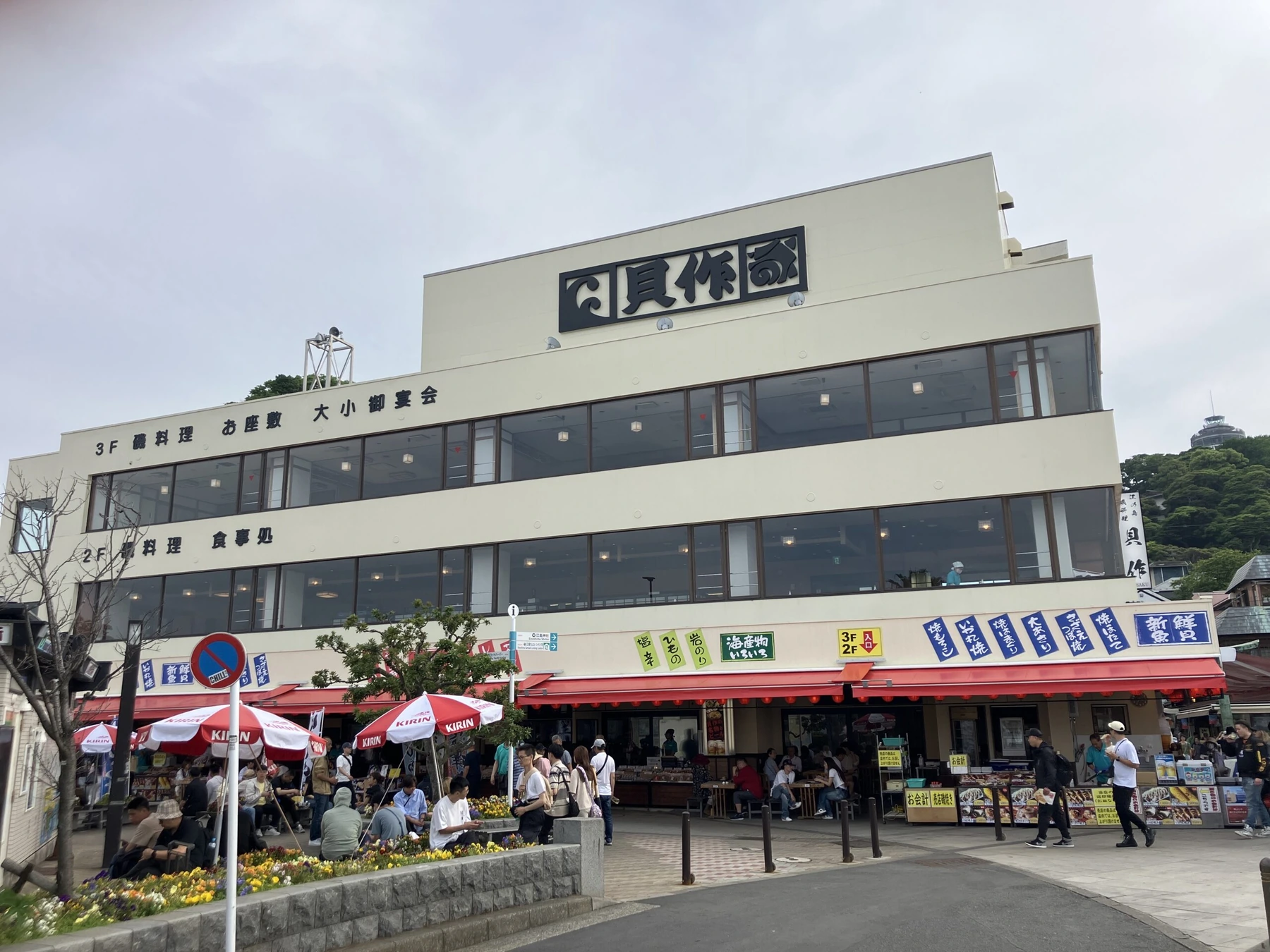
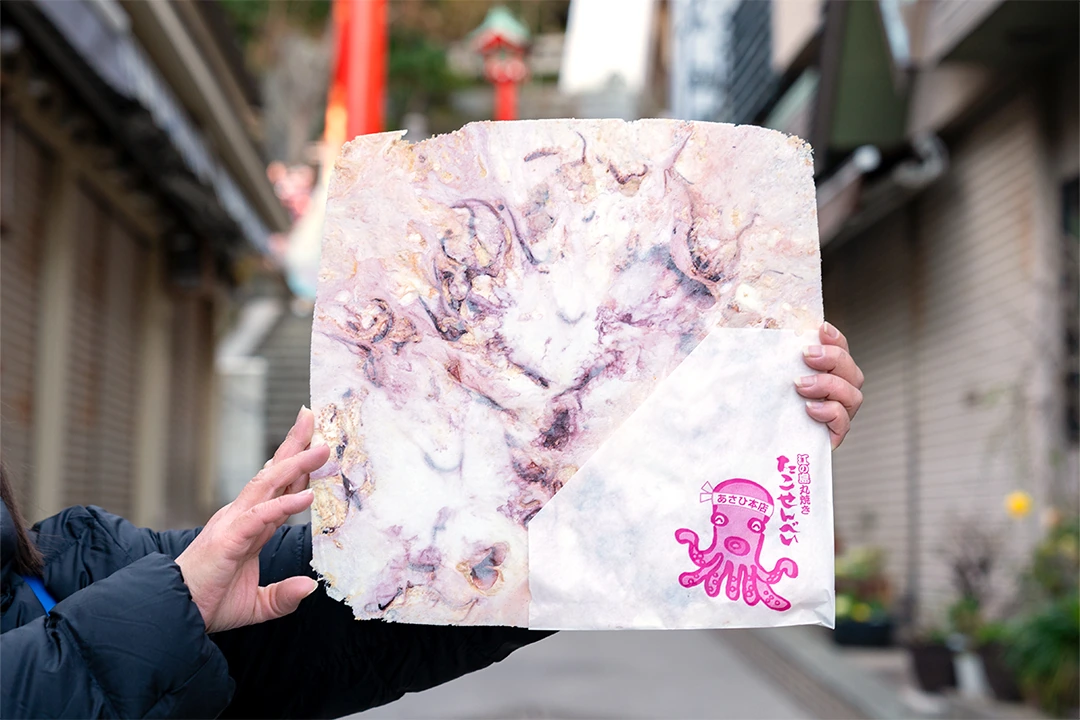
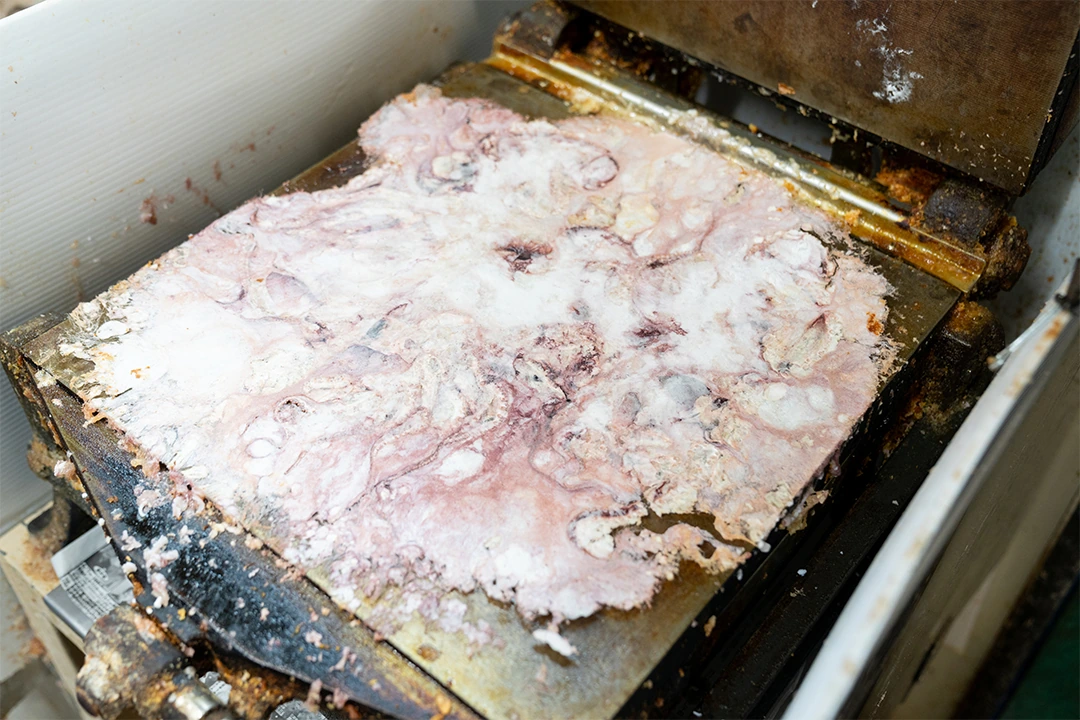
After crossing Benten Bridge, find your bearings. Kaisaku is near the entrance; look for freshly pressed crackers along Nakamise toward the shrine. Enoshima Island Spa lies west of the island entrance. Bathe first or save it for the return downhill.

  • Enoshima Island Spa

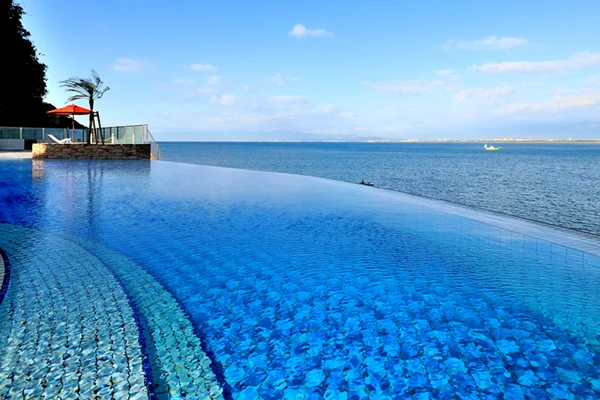
    A sea-facing hot spring and spa near the island entrance. “Fuji Kaiyu” offers natural hot spring baths separated by gender, while the shared spa pools require swimwear and include indoor, outdoor and cave areas. The second-floor outdoor area closes from October through March. Renovation closure is scheduled for January 12–March 24, 2027; check the latest notices and age conditions before visiting.

    Hours
    Official April–September schedule: natural hot spring baths 7:00–21:00, last admission 20:00; pools 10:00–20:00.
    Fees
    On regular days in September, adult admission for the hot spring and pools is ¥3,750; a 3-hour hot spring visit is ¥2,250. Both include the ¥150 bathing tax. Surcharges apply on designated dates.
    Seasonal schedule / closures
    The second-floor outdoor pool is closed from October through March. There are also routine maintenance closures in May and December.
    Age / reservations
    Hot spring baths and pools are for elementary school children and older. Children must be accompanied by a guardian of the same gender. General bathing does not require a reservation.
    Suggested visit length
    2–3 hours (editor's recommendation)
    Ticket types and announced construction projects

    Choose either hot spring bathing alone or admission including the pools. Swimwear is required in the pools and is not worn in the gender-separated hot spring baths. The 3-hour bathing ticket excludes towels; a rental set costs ¥550. The hot springs, pools and parts of the main building are scheduled to close for work from January 12 to March 24, 2027, with reopening planned for March 25. Do not plan a bathing visit during that closure.

    Sources
    Enoshima Island Spa, an open-air hydrotherapy pool with sea views
    Enoshima Island Spa, an open-air hydrotherapy pool with sea views© 江の島アイランドスパ ↗

02 / Ascend to a higher elevation along the approach

From the crimson shrine, walk to the garden and lighthouse.

Nakamise leads up to Hetsunomiya, then through Nakatsunomiya to the island summit. Ascending, you may choose the paid Escar; the return journey still requires walking the stairs. If you'd like a relaxed half-day trip, you may visit the garden area and lighthouse to enjoy the sea view and then turn back.

  1. 05

    Hetsunomiya and Hoanden Hall

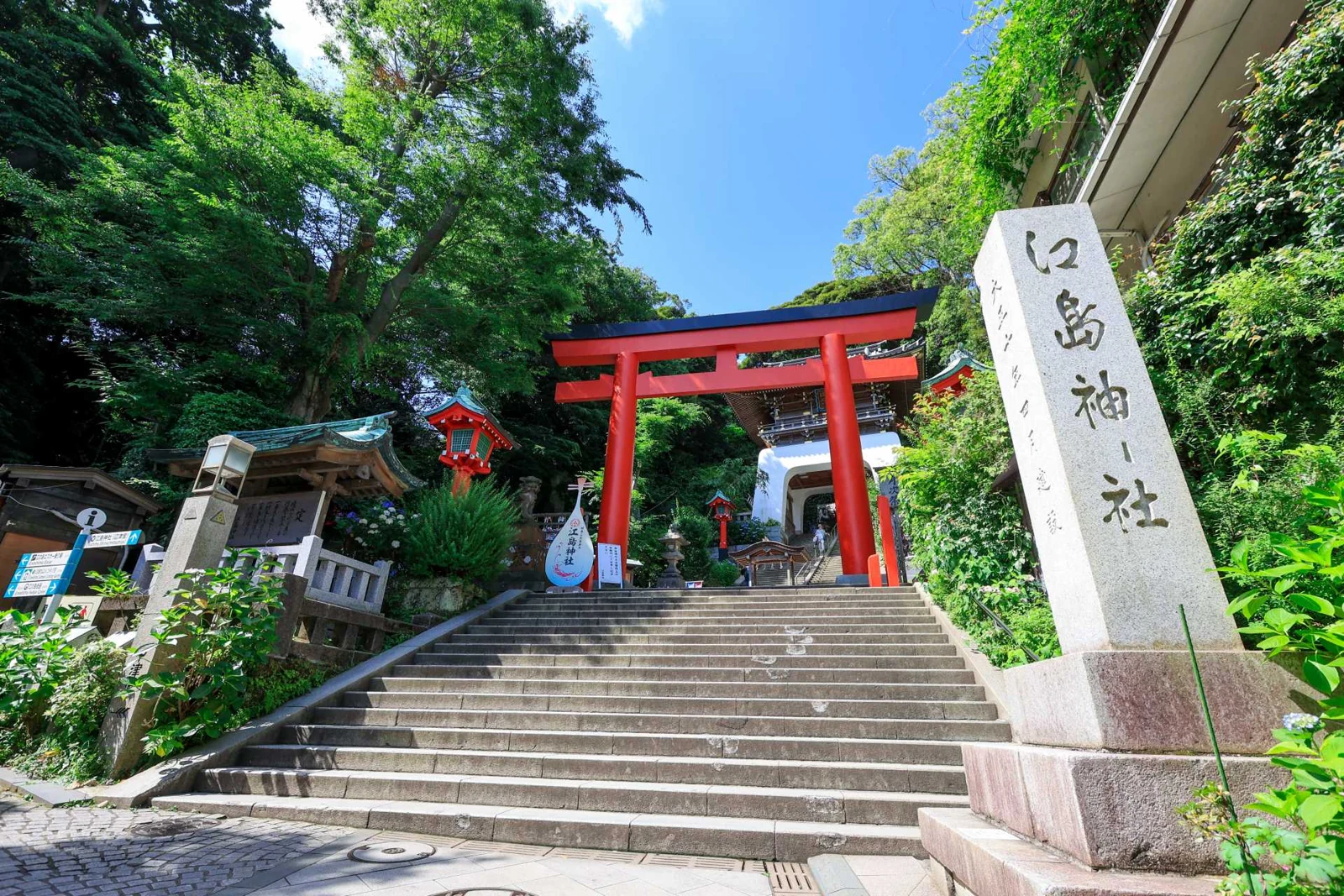
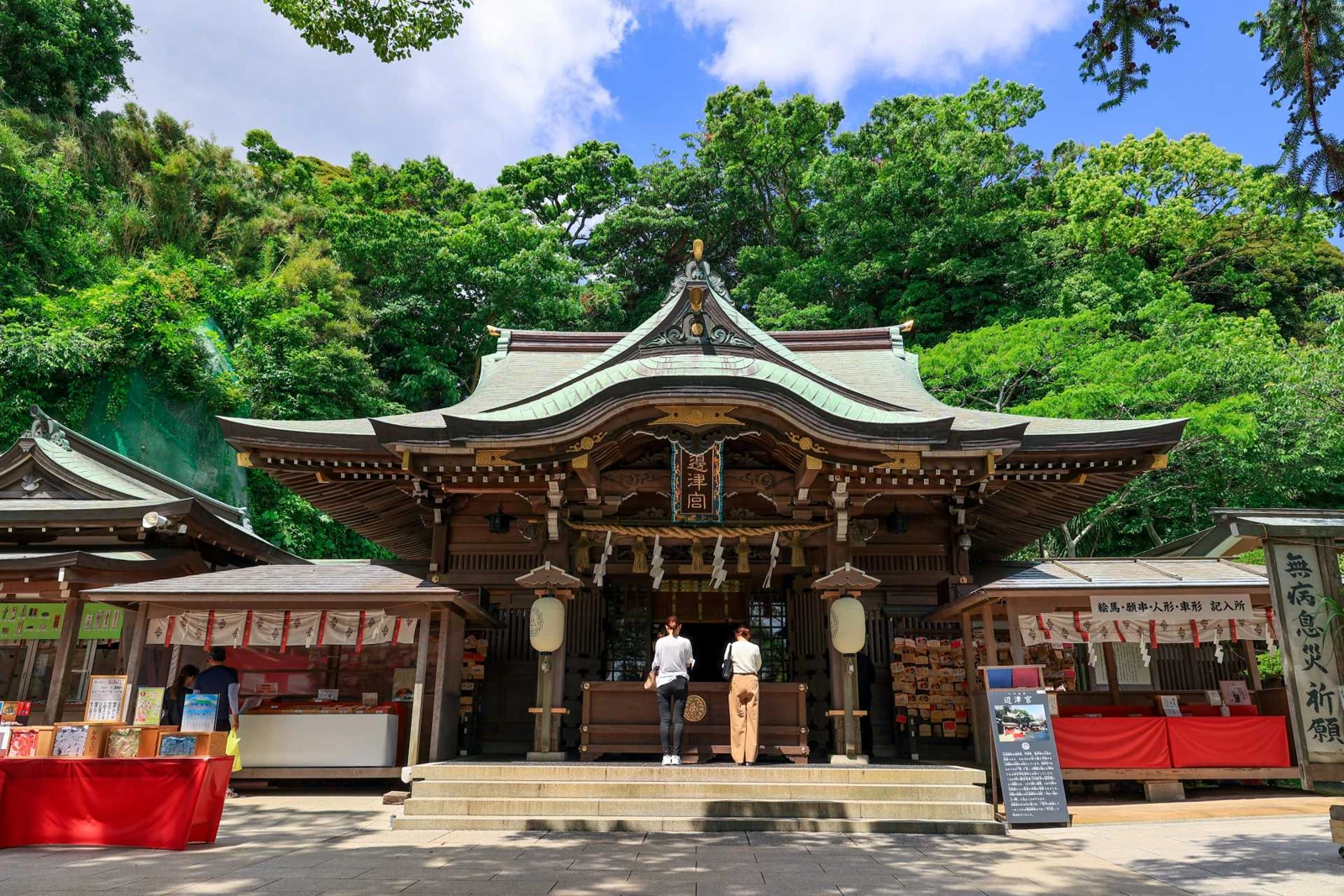
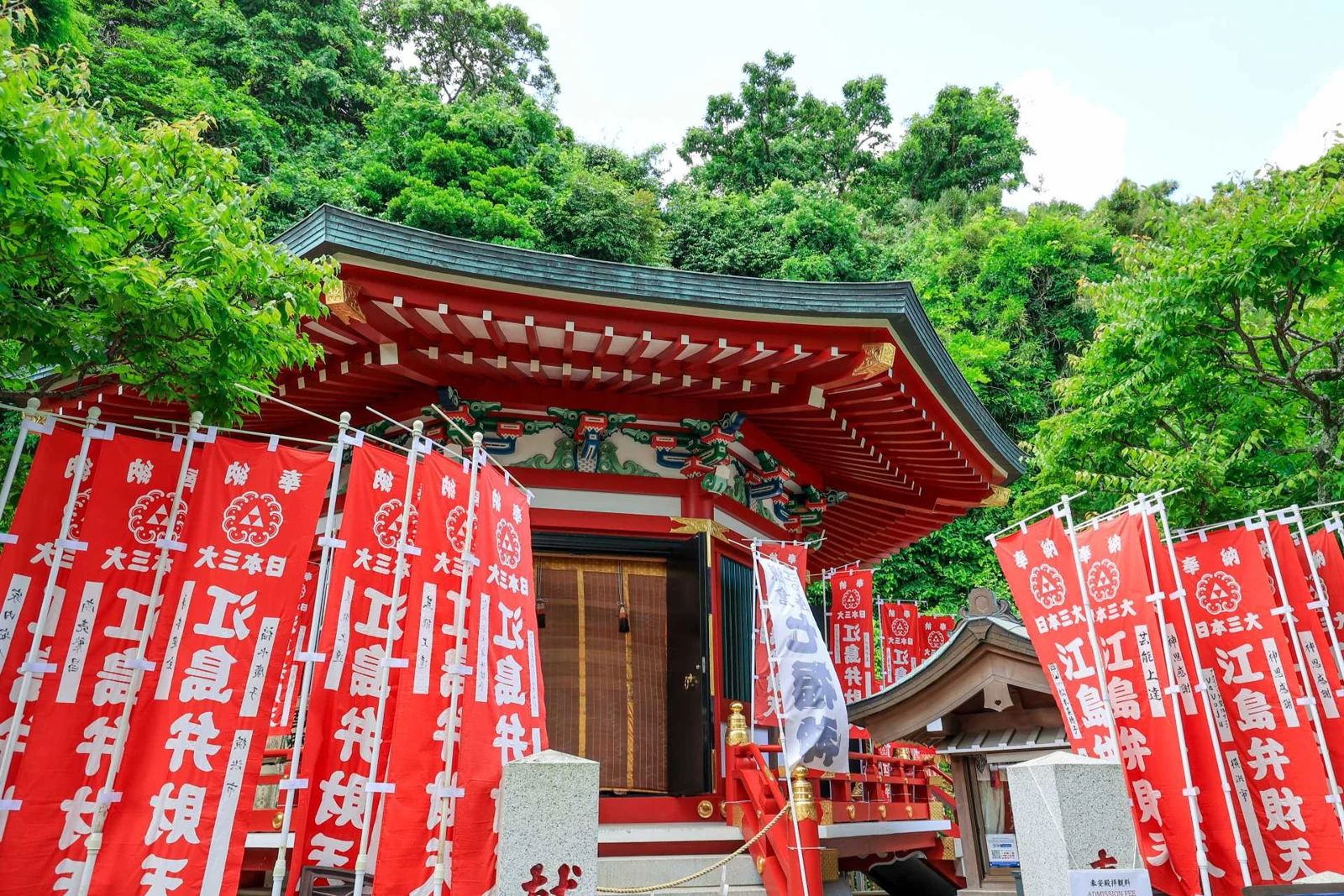
    This is the first of Enoshima Shrine’s three shrines, reached by climbing the steps past vermilion torii gates. The neighboring Hoanden Hall houses statues of Benzaiten and can be visited when open. The shrine and hall are separate buildings.

    Visiting
    Hetsunomiya 8:30–17:00; Hoanden Hall 8:30–16:30
    Admission
    Outdoor visits are free; Hoanden Hall: adults ¥200, middle and high school students ¥100, elementary school students ¥50, preschoolers free
    Reservations
    General visits do not require advance booking; groups of 25 people or more may inquire about special rates.
    Suggested visit length
    25–40 minutes (editor's recommendation)
    Planning your visit

    Climb the steps from Nakamise to visit Hetsunomiya, then head to the octagonal Hoanden Hall on its south side to see the two Benzaiten statues. The hall closes half an hour before the shrine’s usual reception hours end. If you want to see the statues, visit the hall first rather than returning after exploring the whole island.

    Sources
    The vermilion torii, stone steps and Zuishinmon Gate leading to Enoshima Shrine’s Hetsunomiya
    The vermilion torii, stone steps and Zuishinmon Gate leading to Enoshima Shrine’s Hetsunomiya© 藤澤市觀光協會 ↗
    Enoshima Shrine and Hetsunomiya Shrine halls, prayer stone steps, and shaded greenery
    Enoshima Shrine and Hetsunomiya Shrine halls, prayer stone steps, and shaded greenery© 藤澤市觀光協會 ↗
    The red building at Enoshima Shrine's Hoanden Hall and the Benzaiten flag
    The red building at Enoshima Shrine's Hoanden Hall and the Benzaiten flag© 藤澤市觀光協會 ↗
  2. 06

    Nakatsunomiya

    Continue uphill to Nakatsunomiya, which enshrines Ichikishimahime-no-Mikoto. Together with Hetsunomiya and Okutsunomiya, it forms Enoshima Shrine. Visiting all three reveals how the shrine complex follows the island’s terrain.

    Visiting
    Daytime visits to the outdoor shrine grounds between 8:30 and 17:00 are recommended. A separate closing time for this shrine is not clearly published.
    Admission
    Outdoor shrine visits are free.
    Reservations
    General visits do not require advance booking.
    Suggested visit length
    10–20 minutes (editor's recommendation)
    Planning your visit

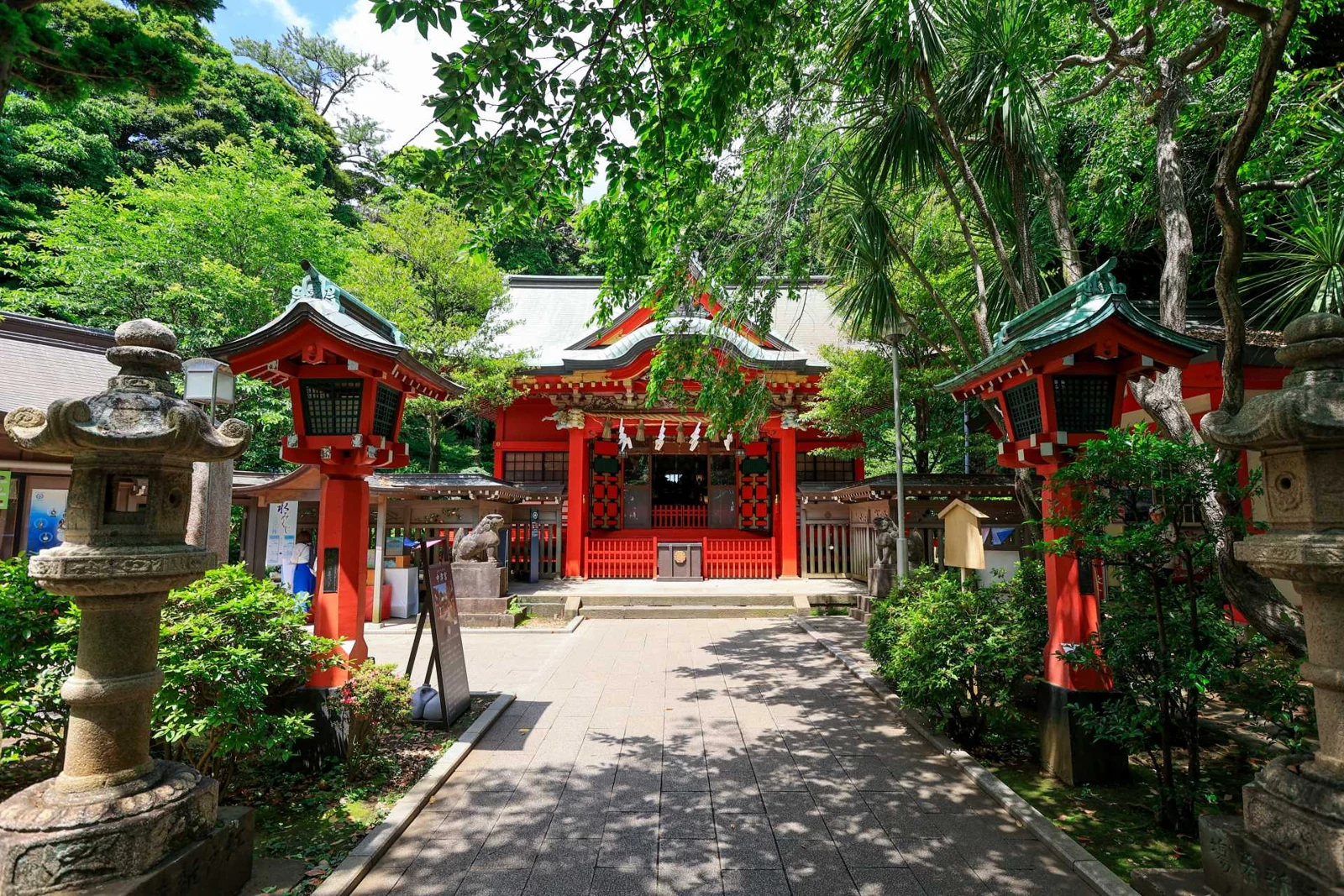
    Pause on the way to the summit to see the vermilion shrine building and donated stone lanterns on either side. This is a good place to slow your climbing pace. If you have an Escar ticket, use its uphill sections to save energy, while following on-site directions for entrances, exits and walking routes.

    Sources
    Enoshima Shrine, Nakatsunomiya's crimson shrine hall and approach
    Enoshima Shrine, Nakatsunomiya's crimson shrine hall and approach© 藤澤市觀光協會 ↗
  3. 07

    Samuel Cocking Garden

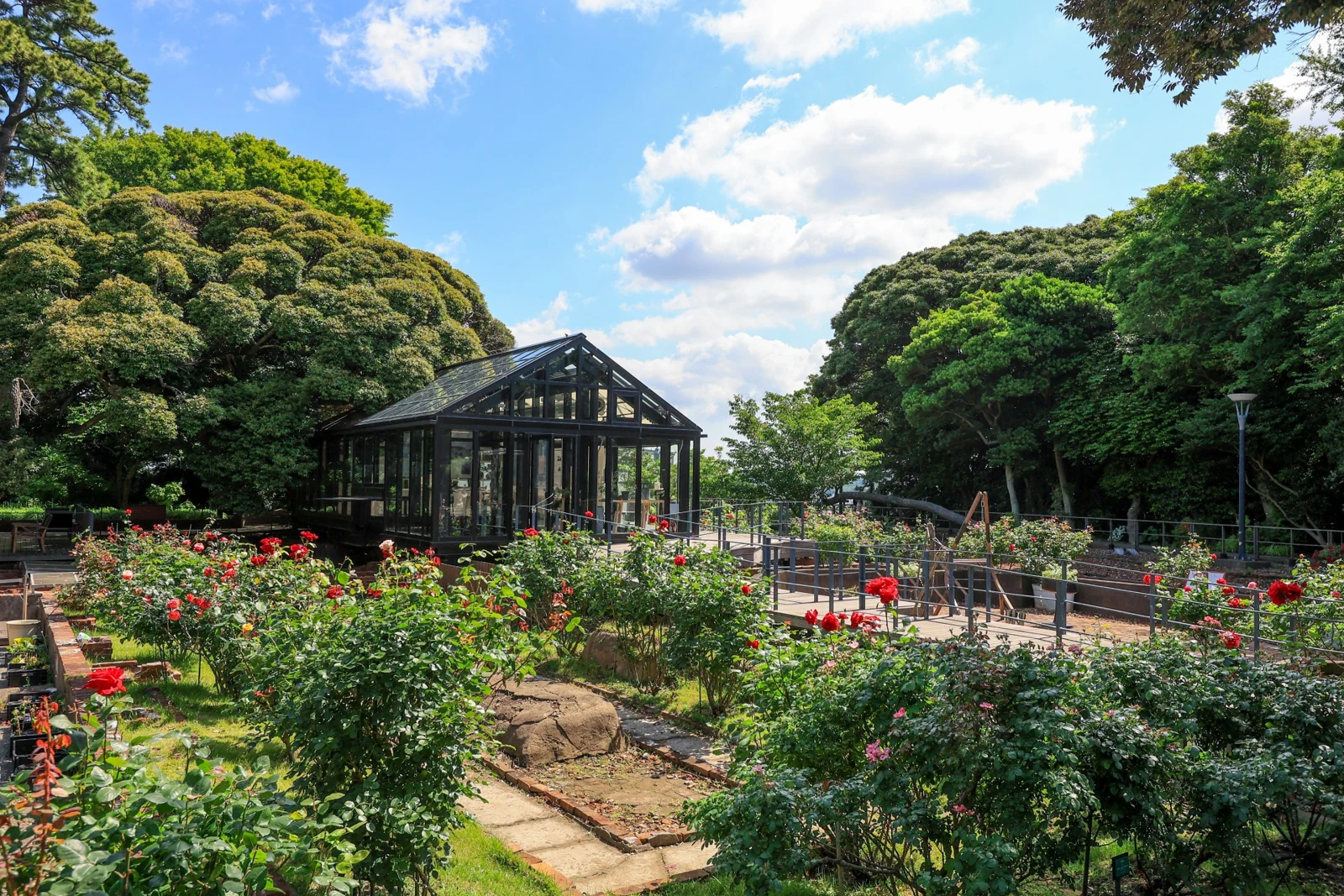
    Slow down at the Enoshima Summit Garden to learn the story of Enoshima's modern garden and greenhouse ruins, then continue to the observation lighthouse. Some areas within the garden may be temporarily closed for maintenance adjustments.

    Regular hours
    9:00–20:00, last garden entry at 19:30. Hours may be extended on event days.
    Admission
    Free from 9:00 to 17:00, and free all day when there is no event. On event days, visitors leaving the garden after 17:00 pay ¥500 for adults or ¥250 for elementary school students.
    Reservations
    General admission does not require advance booking; night activities can be accessed by purchasing official-linked e-tickets.
    Suggested visit length
    30–45 minutes; combined with the tower totaling 60–90 minutes (editor's recommendation)
    Planning your visit

    On event days, the evening fee depends on when you leave the garden. Entering in the afternoon and staying after 17:00 still requires payment. Sunset Terrace is temporarily closed for work from June 16, 2026 until an expected completion at the end of November; the rest of the garden remains open. During the 2026 Enoshima Lantern Festival through September 23, the garden closes at 20:30 on weekdays and 21:00 on weekends and holidays, with last admission 30 minutes before closing.

    Sources
    Samuel Cocking Garden's flower beds, greenhouse ruins, and exhibition building
    Samuel Cocking Garden's flower beds, greenhouse ruins, and exhibition building© 藤澤市觀光協會 ↗
  4. 07

    Enoshima Sea Candle

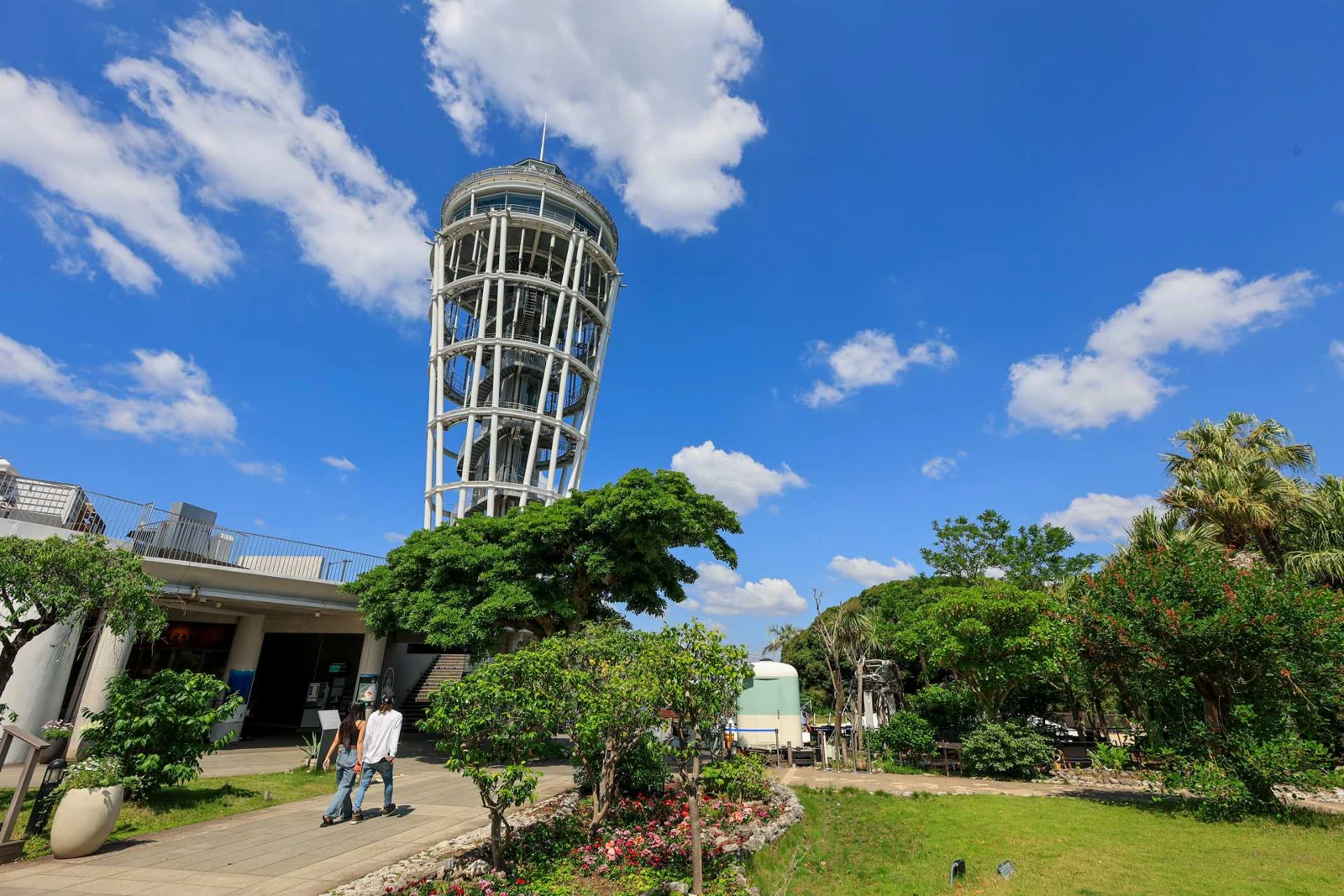
    From the viewing tower, you can see Sagami Bay, the Shonan coastline, and the outlines of islands. Visibility depends on the weather that day. This is a separate facility from the Sunset Terrace in the garden.

    Regular hours
    9:00–20:00; usual last entry at 19:30, extended session days subject to separate announcement
    Admission
    Observation tower: adults ¥800, elementary school students ¥400. Evening visits on event days also require a garden ticket costing ¥500 / ¥250.
    Combination tickets
    If taking the full Escar route, daytime ticket with Tower + Escar: ¥1,100 / ¥550; includes evening garden version: ¥1,550 / ¥750
    Reservations
    Tickets can usually be bought on site. Allow extra time for the lift queue around dusk on holidays.
    Suggested visit length
    30 to 45 minutes, excluding waiting time (editor's suggestion)
    Planning your visit

    Check cloud cover before going up the tower specifically to see Mount Fuji. Strong winds may restrict access to outdoor observation areas. During construction, the lift does not stop at the Sunset Terrace floor, but the tower itself remains open. During the 2026 lantern event through September 23, weekday closing is 20:30 with last admission at 20:15; on weekends and holidays, closing is 21:00 with last admission at 20:45.

    Sources
    Enoshima Sea Candle observation lighthouse and gardens beneath a blue sky
    Enoshima Sea Candle observation lighthouse and gardens beneath a blue sky© 藤澤市觀光協會 ↗

03 / Crossing the mountain ridge, the sea lies beneath your feet

Leave the sea view on the island for a meal.

From the summit, follow O-Iwaya-michi toward Okutsunomiya, then Uomitei above the steps. After eating, descend to Chigogafuchi and the Iwaya Caves if your energy allows. The return involves climbing back uphill, so leave enough time.

  1. 08

    Okutsunomiya

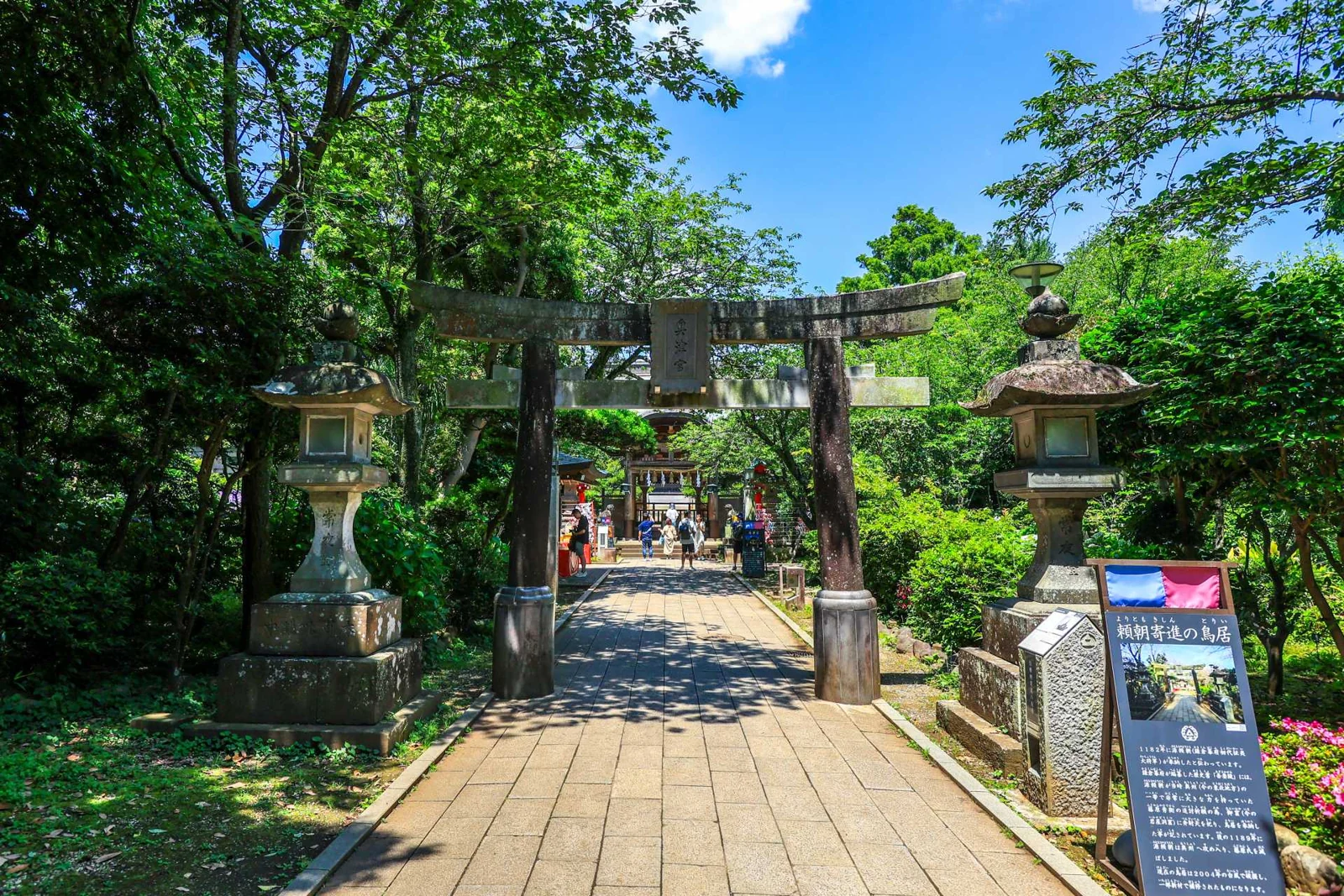
    Continue west from the lively summit to Okutsunomiya, which enshrines Tagirihime-no-Mikoto. Look up at the ceiling of the worship hall to see the “Turtle Watching in All Directions,” a distinctive sight on a visit to the three shrines.

    Visiting
    8:30–17:00, as listed on the official Enoden and Odakyu travel pages.
    Admission
    Outdoor shrine visits are free.
    Reservations
    General visits do not require advance booking.
    Suggested visit length
    15–25 minutes (editor's recommendation)
    Planning your visit

    Look up at the ceiling painting of the all-seeing turtle when visiting. The version displayed here is a reproduction; the original is kept in the shrine office. Continue along the designated roads toward Uomitei and Chigogafuchi. Before deciding how long to spend over lunch, check how much visiting time remains at the Iwaya Caves.

    Sources
    Enoshima Shrine Okutsunomiya stone torii and shaded approach
    Enoshima Shrine Okutsunomiya stone torii and shaded approach© 藤澤市觀光協會 ↗

09 / SEA VIEW & LOCAL FLAVOURS

Uomitei
Let Sagami Bay, accompany you for a meal.

Uomitei says it has around 150 years of history and began as a small luggage-storage business. The restaurant lies toward Enoshima’s western end, beyond Okutsunomiya and above the steps down toward the Iwaya Caves. Stopping here for a meal brings the old pilgrimage route and sea views together.

Hours
Opens at 10:00; last orders at 17:00.
Closed days
Variable closing; may close due to typhoon, heavy rain warnings, etc.
Dining budget guide
Enoshima-don ¥1,250; boiled shirasu whitebait rice bowl ¥1,300; seafood rice bowl ¥2,500. Drinks are charged separately as ordered.
Reservations
No reservations accepted, first-come, first-served
Suggested visit length
60–90 minutes, plus waiting time (editor's recommendation)
Planning your visit

Visit Okutsunomiya before entering the restaurant to avoid a long uphill climb immediately after eating. For terrace or window seats, the restaurant recommends arriving before noon. There are still steps down to Chigogafuchi and the Iwaya Caves after lunch, so do not leave your meal until close to the caves’ closing time.

Sources
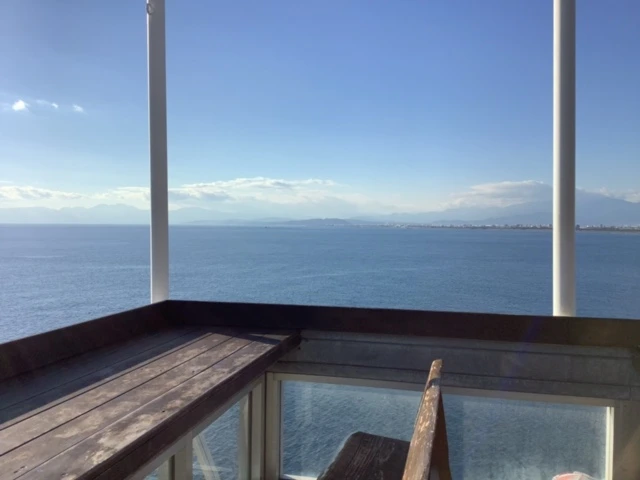
Uomitei's window-side veranda, facing Sagami Bay
Uomitei's window-side veranda, facing Sagami Bay© 魚見亭 · 官方照片 ↗
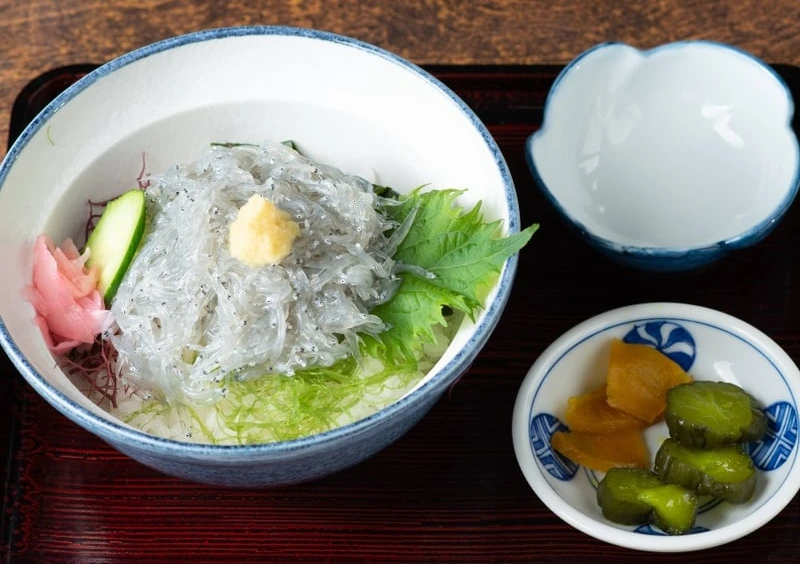
Uomitei: raw shirasu rice bowl, subject to the day’s catch
Uomitei: raw shirasu rice bowl, subject to the day’s catch© 魚見亭 · 官方照片 ↗
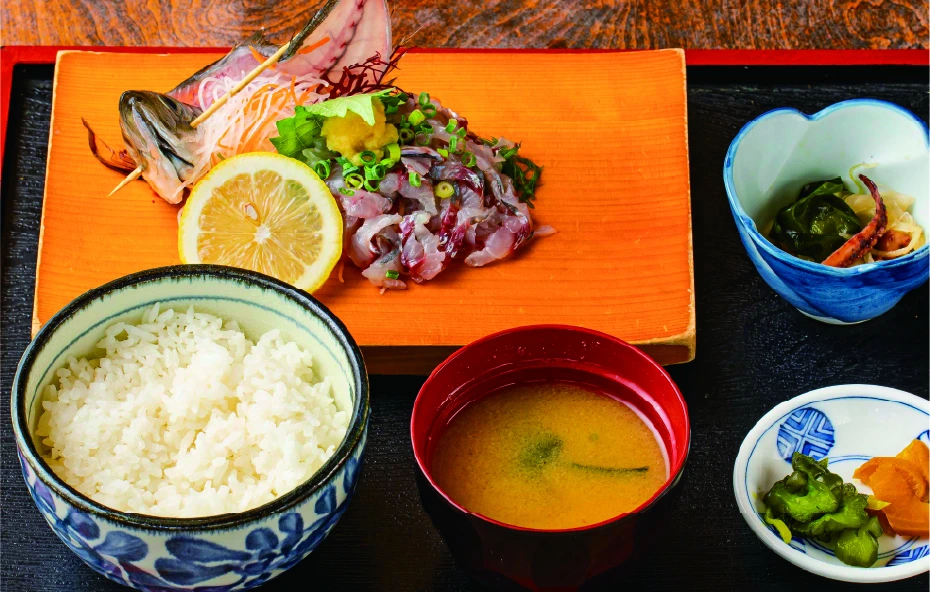
Uomitei: chopped horse mackerel set meal
Uomitei: chopped horse mackerel set meal© 魚見亭 · 官方照片 ↗

Sea view and seating

The restaurant describes all seats as having sea views. From the terrace, the sea opens out below you, with nearby cliffs and breaking waves. On clear days, you can also look toward Mount Fuji, Hakone and Izu Oshima. The attraction is the broad view and sound of the waves; visibility of Mount Fuji and access to the terrace still depend on weather and on-site arrangements.

A place worth savoring slowly for its local flavors

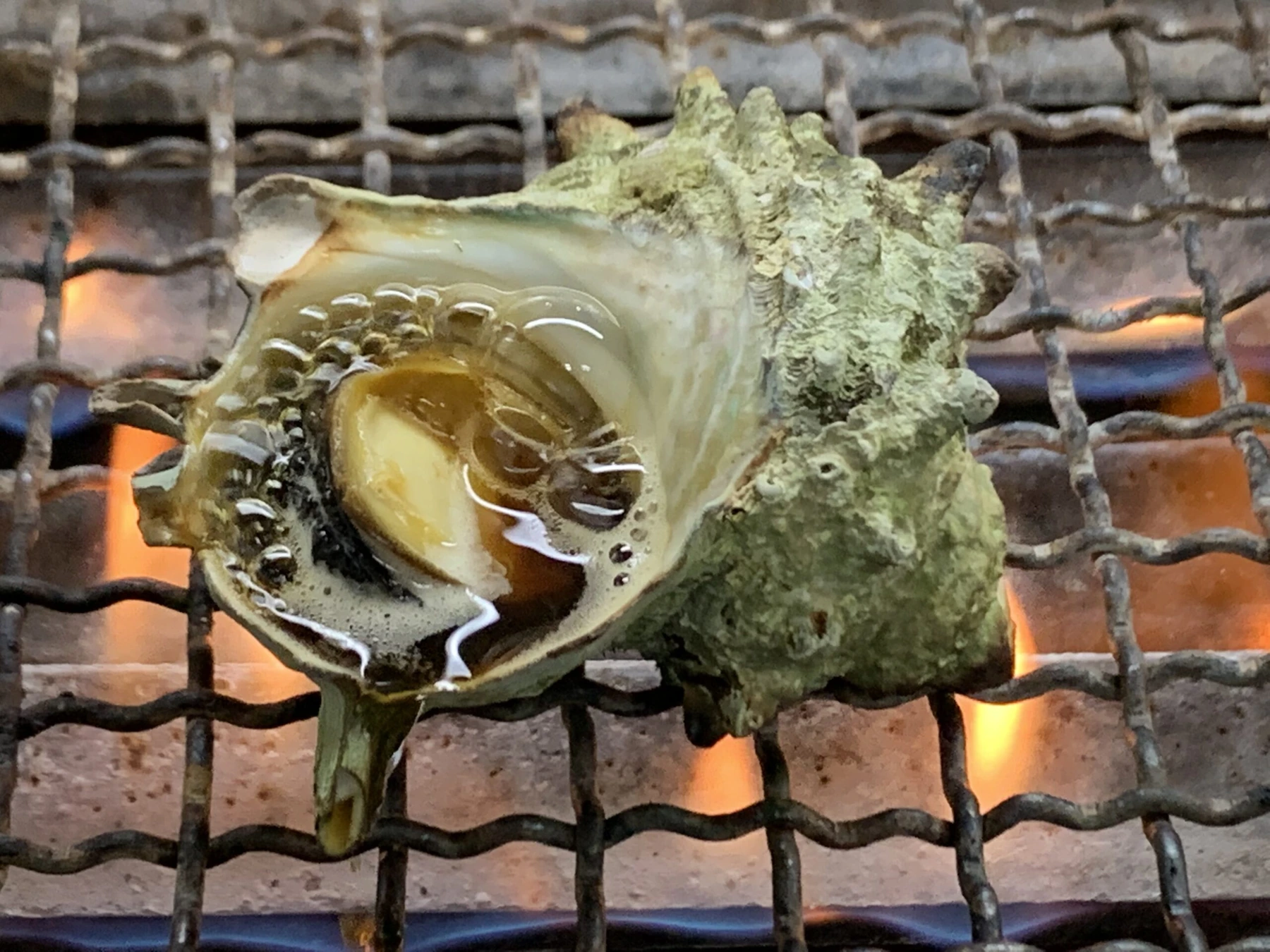
The official menu includes Enoshima-don, boiled shirasu whitebait rice bowls, seafood rice bowls, a chopped horse mackerel set meal and grilled turban shells. Try Enoshima-don or a shirasu dish for local flavors. Raw shirasu availability depends on the closed fishing season and the day’s catch; choose a cooked dish when it is unavailable.

Visit Hetsunomiya, Nakatsunomiya, the summit and Okutsunomiya before stopping for a meal. Afterward, continue to Chigogafuchi and the Iwaya Caves if your energy and sea conditions allow. The restaurant does not accept reservations, and weather or ingredients selling out may affect its opening hours.

Sources
  1. 10

    Chigogafuchi

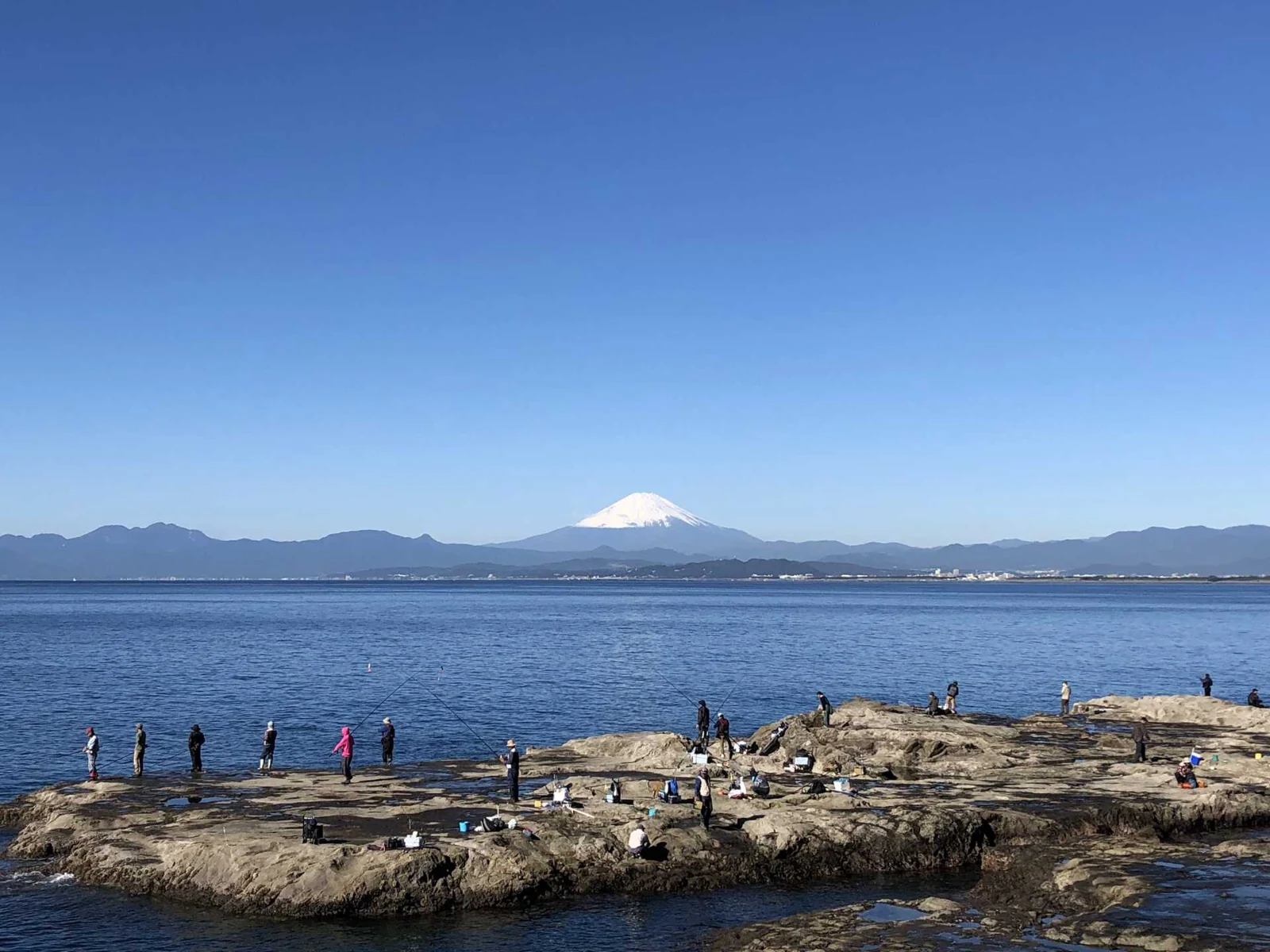
    Take the steps down to the island’s western rocky shore to watch waves breaking against the rocks and enjoy the open sea. On clear days, look toward Mount Fuji, though a view is not guaranteed. Waves and on-site restrictions determine which areas you can access.

    Access hours
    On outdoor rocky shores, it is recommended to walk during the day when sea conditions are stable, within the on-site open area.
    Admission
    Public viewing area is free.
    Reservations
    General walking does not require advance booking.
    Suggested visit length
    20 to 30 minutes, plus return stairs (editor's suggestion)
    Planning your visit

    Before going down to the rocky shore, consider the uphill climb on your return. Shoes with good grip matter more than appearance. To see both the Iwaya Caves and sunset, visit the caves first, then return to a viewpoint. Do not cross barriers when waves are high, surfaces are slippery or areas are closed. Ferry services also depend on sea conditions.

    Sources
    Enoshima Chigogafuchi rock shore and distant Mount Fuji
    Enoshima Chigogafuchi rock shore and distant Mount Fuji© 藤澤市觀光協會 ↗
  2. 11

    Enoshima Iwaya Caves

    Follow the open route into caves formed by wave erosion and learn the origin legends of Enoshima’s religious traditions. Stories involving Kobo Daishi and Nichiren, and the belief that the caves connect to Mount Fuji, should be understood as religious lore.

    Hours
    Official basic operating hours: 9:00–17:00, subject to seasonal adjustments; daily information available on the Fujisawa City Tourism homepage.
    Admission
    Junior high school students and older: ¥500; elementary school students: ¥200. Groups of 20 or more receive a 20% discount.
    Closed days
    No fixed days off; may temporarily close due to poor weather, large waves, or maintenance
    Reservations
    General individual visitors do not need to make a reservation.
    Suggested visit length
    30 to 45 minutes, plus additional time to return to the summit and station (editor's suggestion)
    Planning your visit

    The caves are at the far western end of the island. Going there first in the morning and exploring other sights on the way back reduces the risk of running out of time before closing. Inside, check the separate routes through the First and Second Iwaya Caves. Lighting and floor conditions differ from outdoors; do not block narrow passages while taking photos. If you plan to return on the Bentenmaru boat, check that day’s service status rather than assuming it will be running.

    Sources
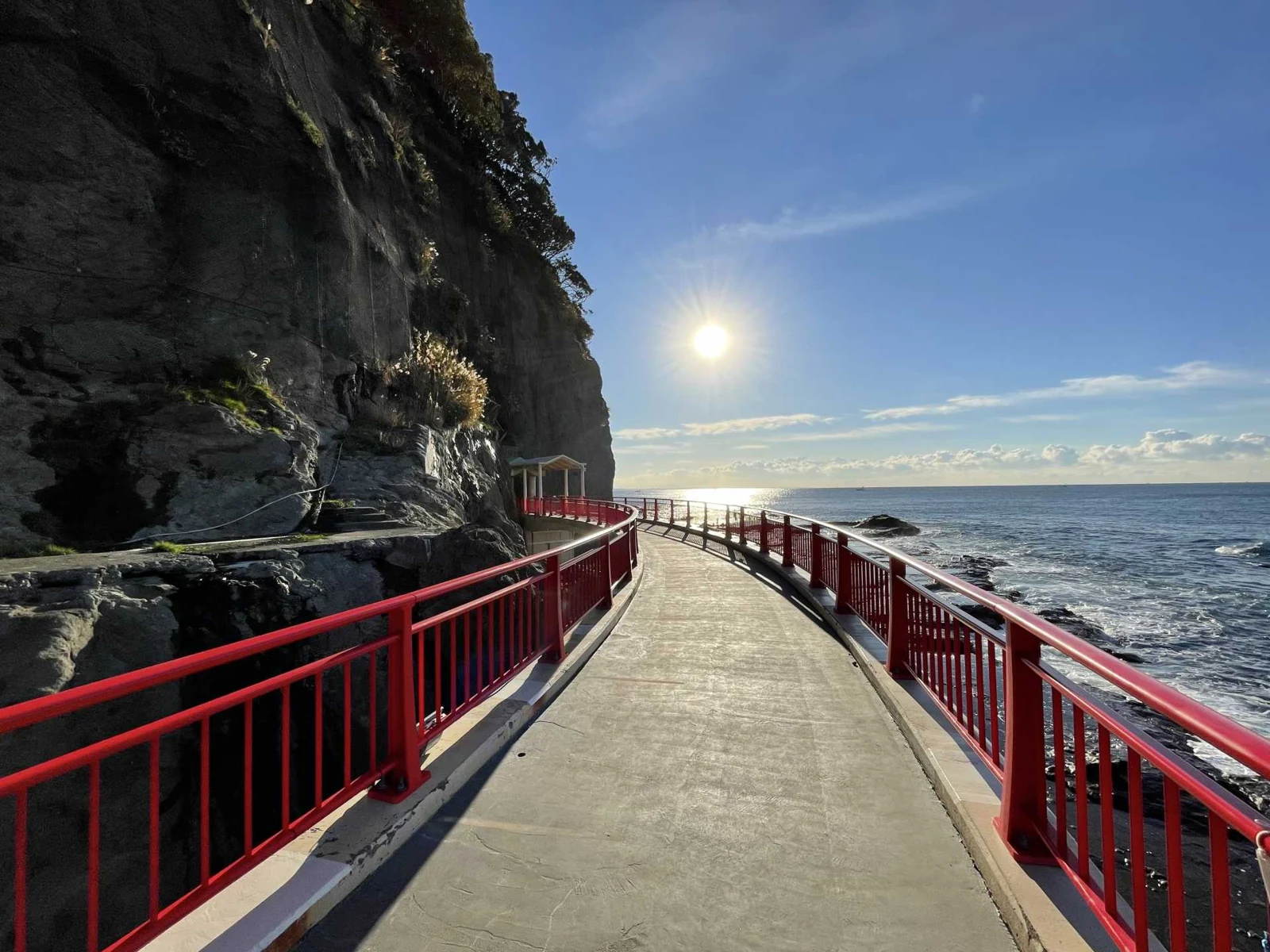
    The red railings pathway extending along the cliffside beside Enoshima Iwaya Caves
    The red railings pathway extending along the cliffside beside Enoshima Iwaya Caves© 藤澤市觀光協會 ↗
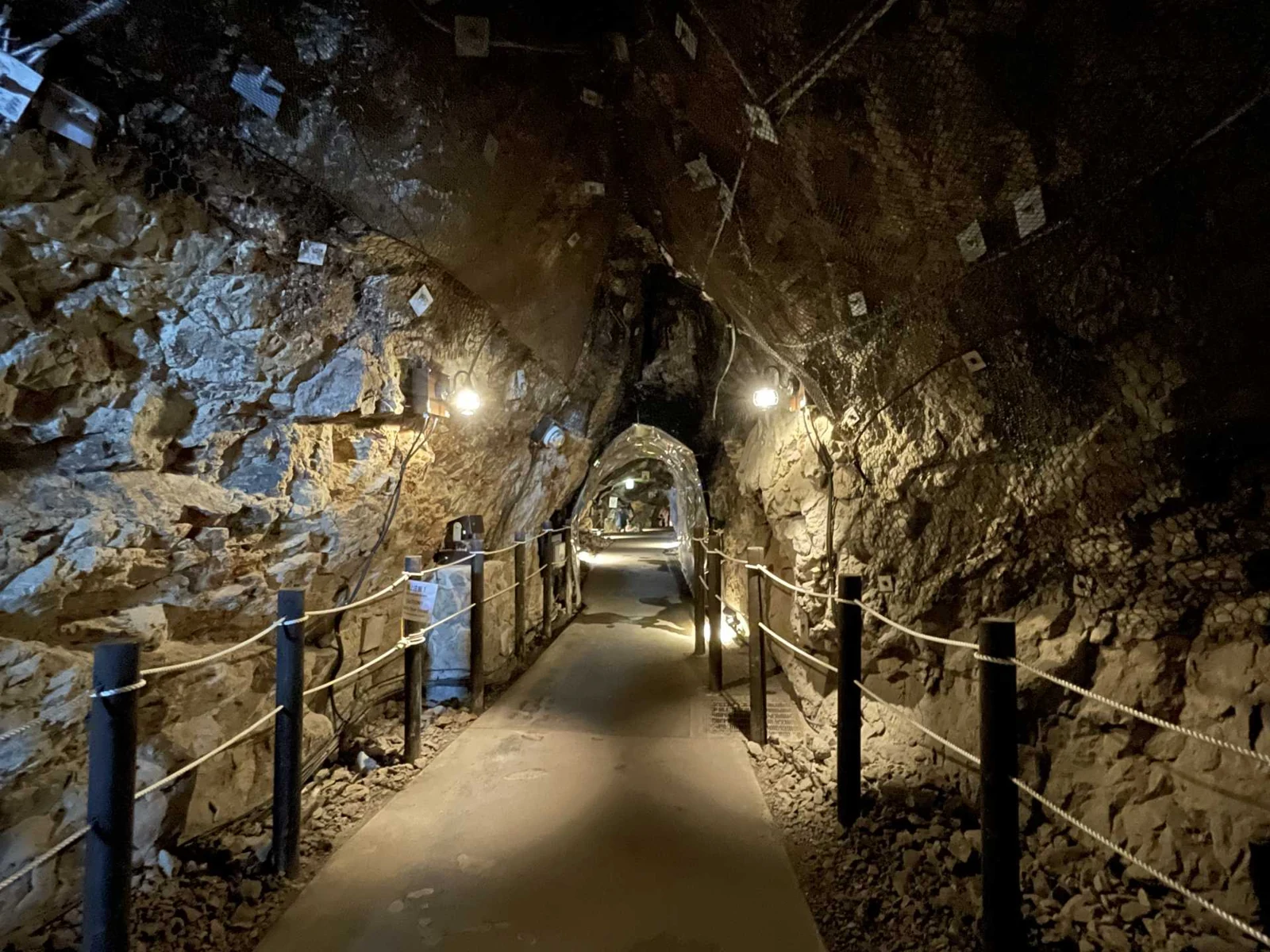
    The rock walls, lighting, and viewing pathways inside Enoshima Iwaya Caves
    The rock walls, lighting, and viewing pathways inside Enoshima Iwaya Caves© 藤澤市觀光協會 ↗

Include the stairs and return journey, too, in the itinerary.

  • Enoshima Escar provides segmented assistance uphill, available only in the upward direction; the return journey still requires walking downhill and stairs.
  • Combine the three shrines, summit, Uomitei and Iwaya Caves into one route toward the island’s western end. Adjust your return according to your energy. If you prefer not to climb back uphill, check whether the Bentenmaru boat is running, as rough seas may suspend service.
  • Sea winds, rain and steps affect the walk. Check daily notices for access to the rocky shore and Iwaya Caves. Do not use low tide or photographs to decide where it is safe or permitted to walk.

Sunset Terrace under renovation

Sunset Terrace in Samuel Cocking Garden has been temporarily closed since June 16, 2026, with construction expected to finish at the end of November 2026. Its shop is closed, and the Sea Candle lift does not stop at that floor. The garden and Sea Candle tower themselves remain open as usual. Check official notices for the latest access arrangements.

Official updates ↗Verify:2026-09-15
Sources

Another day, or take the return trip

Landside: Aquarium and station district.

The following attractions are north of the sea bridge. From the Enoden Enoshima Station, you can first explore the landside; if you've completed the full route on the island, save the seaside stroll for another time.

EN06 / Katase Coast・Enoshima Aquarium

Step into the sea,
Look back again at Enoshima.

Enoshima Aquarium (Enosui) is located on the landside of Katase Coast, a 10-minute walk from the Enoden Enoshima Station. The fish schools of Sagami Bay, the ethereal glow of jellyfish, deep-sea exploration, and the seaside dolphin viewing area are worth dedicating a half-day to experience, rather than merely taking a quick photo of the exterior before visiting the island.

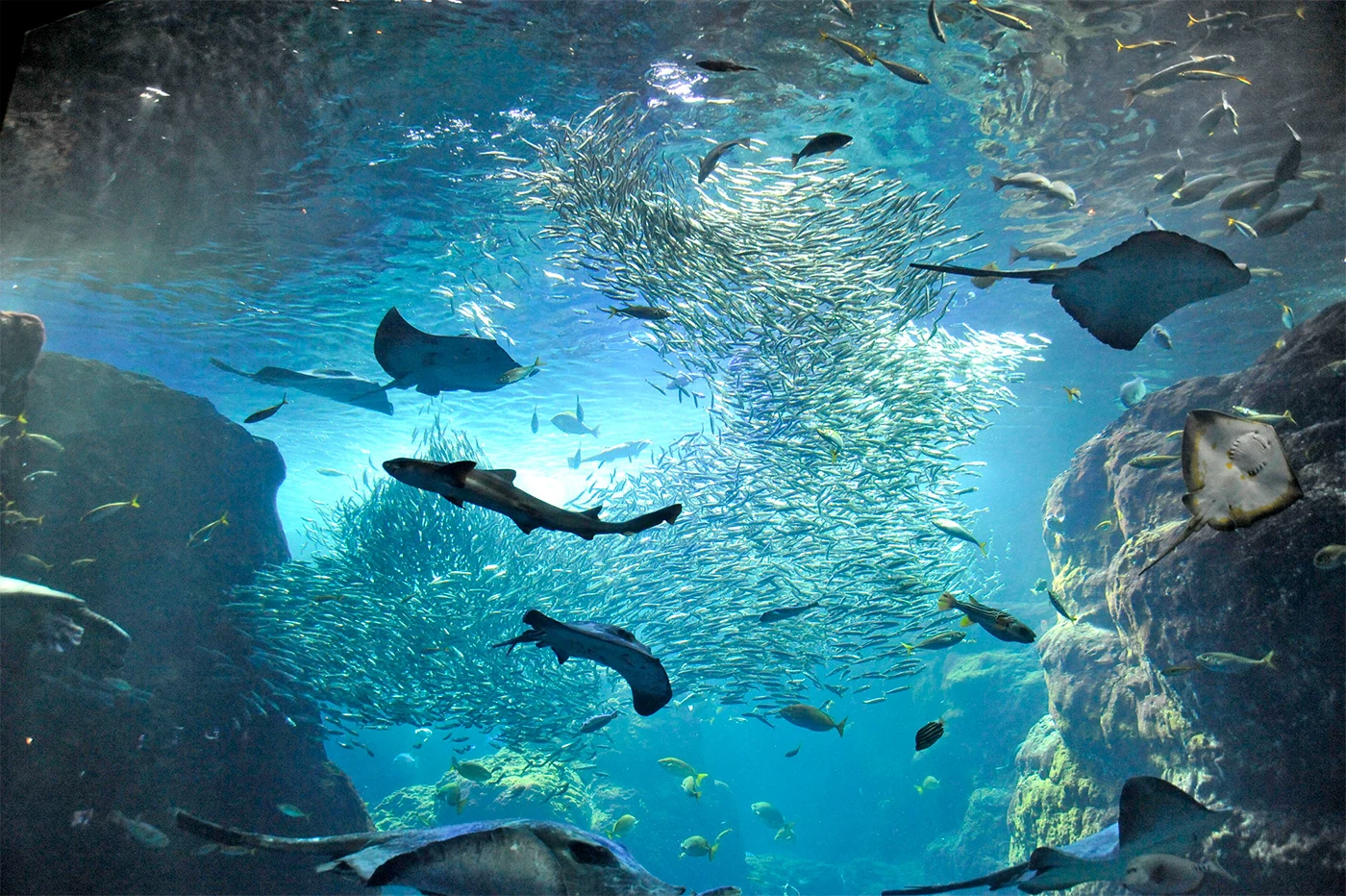
Enoshima Aquarium · Sagami Bay main aquarium fish population
Enoshima Aquarium · Sagami Bay main aquarium fish population© 新江之島水族館 · 官方照片 ↗

The main Sagami Bay tank: watch the fish, then discover the sea’s layers

The exhibition begins with a realistic view of Sagami Bay, gradually moving from rocky reefs and shorelines into deeper waters. In the large aquarium, the sardine schools shift like a shimmering silver curtain that breathes, with larger fish passing through; by lingering at different floor levels and angles, one can truly understand this sea—far more so than simply taking photos at the main viewing window.

Jellyfish Fantasy Hall: slow down with drifting life

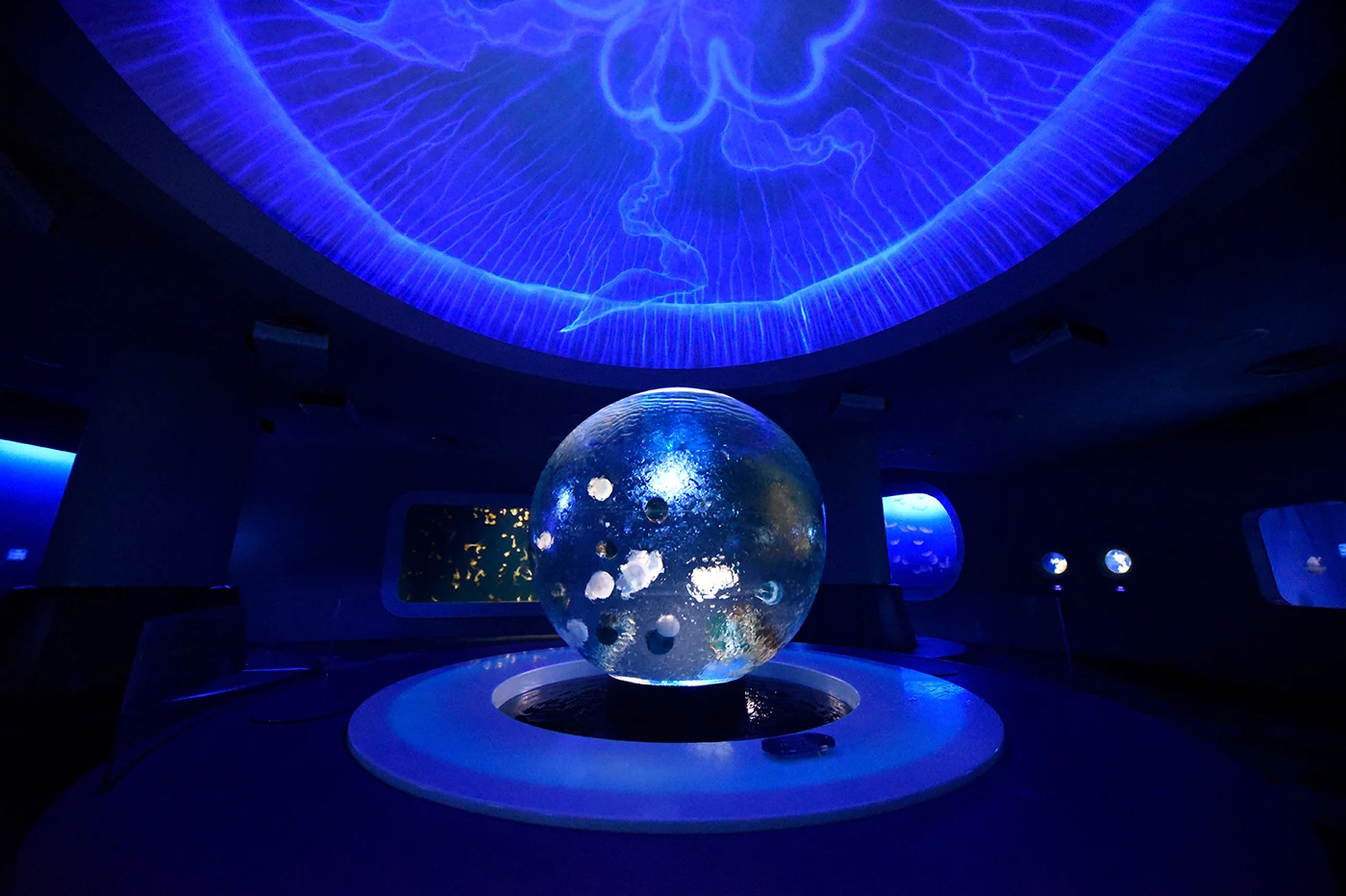
A semicircular dome and the central spherical Jellyfish Planet tank create a soft, deep-blue space. Behind the beauty are years of jellyfish husbandry and research. The nearby jellyfish science exhibits extend the experience into their growth and ecology. Lighting shows and displayed species follow the day’s arrangements.

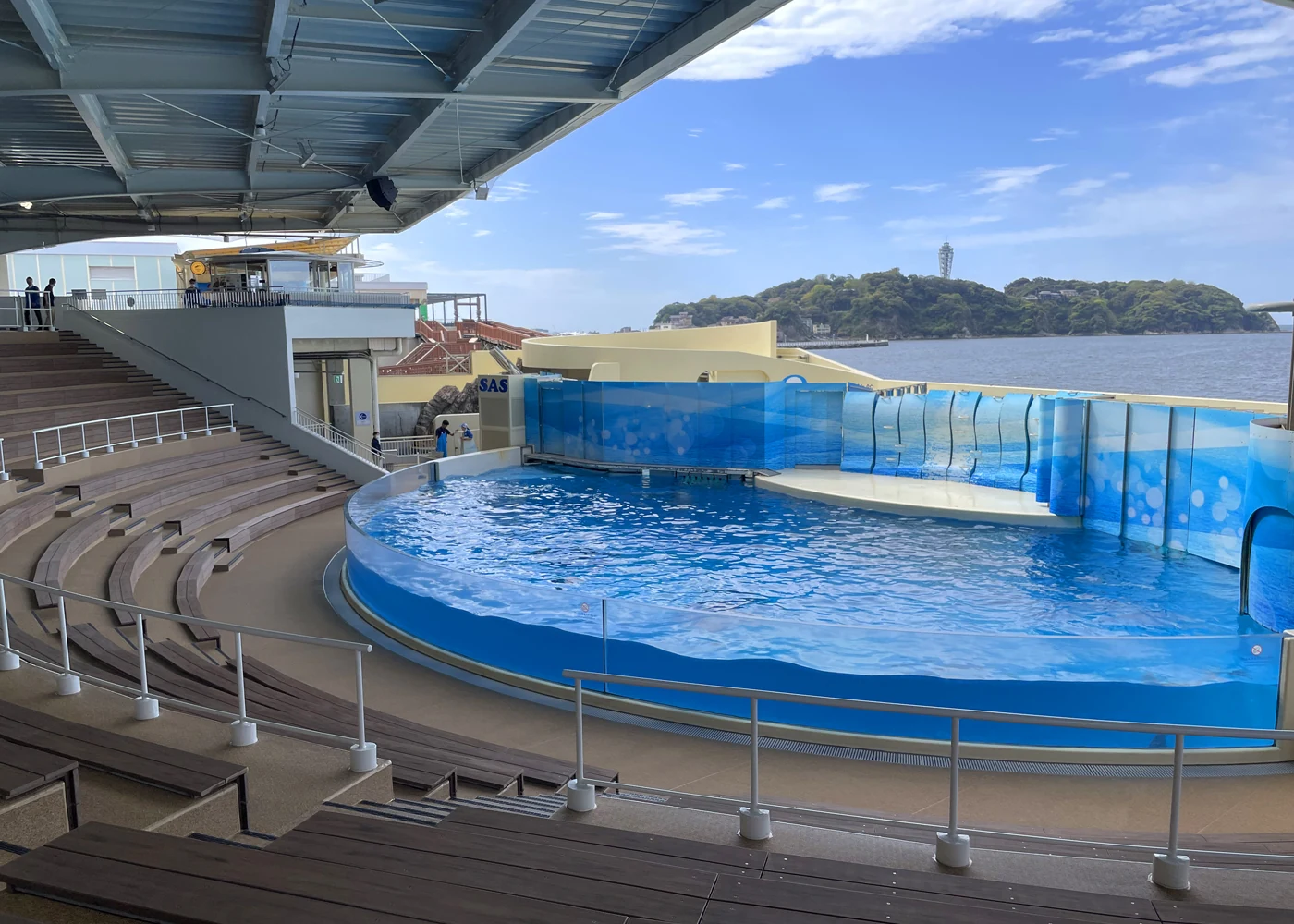
The dolphin arena: sea, Enoshima and sky in one view

The viewing platform connects the performance pool and Shonan sea views, and Mount Fuji can be seen when weather conditions are favorable. Upon arrival, check the daily performance schedule first, then plan the aquarium circuit; the viewing seats have a roof, but the front rows may still get splashed with water. Animal conditions or weather may lead to schedule changes, and the on-site timetable will be the most accurate.

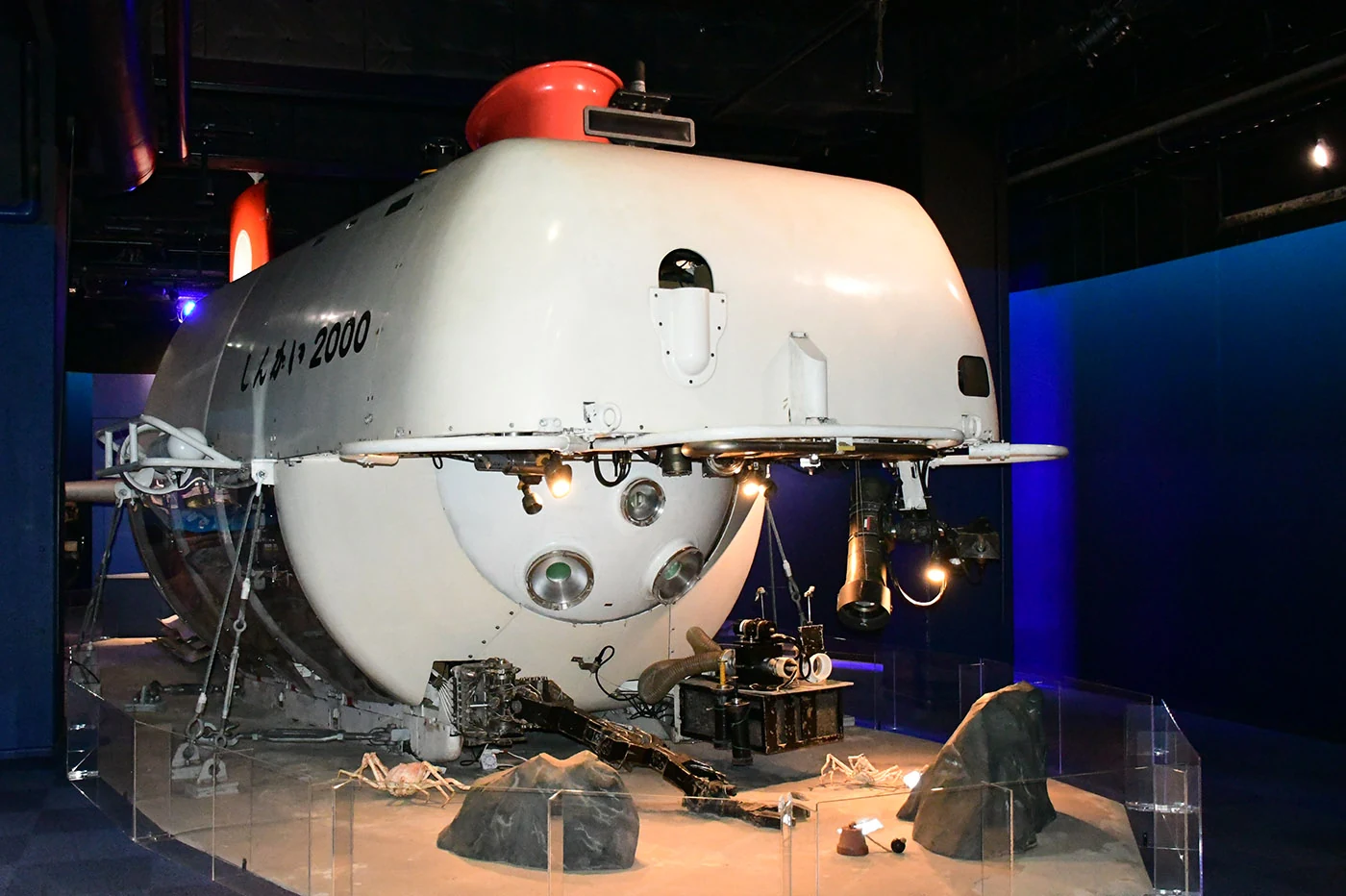
Shinkai 2000: a craft that truly explored the deep sea

On-site exhibits include the actual vessel "Shinkai 2000," allowing visitors to view the hull and cockpit structure up close. It has carried out multiple missions in Sagami Bay; together with the deep-sea biological zones, the calm sea surface comes alive with an imagined depth extending down to two kilometers below.

From the shirasu whitebait of Koshigoe, chasing after their lives

"Shirasu Science" turns the shirasu whitebait served on Shonan dining tables into live, observable specimens, showcasing growth and reproduction research. After having eaten Koshigoe shirasu whitebait rice bowl the previous day, visitors can see the fish swimming the next day—creating a fascinating and engaging connection along the route. Family travelers may also arrange optional excursions to the penguin, otter, and turtle zones.

Half-day aquarium, half-day coast

We recommend allowing 2–3 hours, with longer for a leisurely visit or a family trip. Light meals are sold inside, and Awatan Café is beside the exit. On ordinary dates, follow the aquarium's re-entry procedure. Re-entry is unavailable during the 10:00–15:00 reservation period on September 20–22, 2026. Most tanks and stands are sheltered in rain, but the sea-turtle area and some paths remain outdoors.

Enoshima Aquarium • Jellyfish Fantasy Hall
Enoshima Aquarium • Jellyfish Fantasy Hall© 新江之島水族館 · 官方照片 ↗
Enoshima Aquarium • Dolphin performance pool facing Enoshima
Enoshima Aquarium • Dolphin performance pool facing Enoshima© 新江之島水族館 · 官方照片 ↗
Regular hours
From September 1 to 18, 2026, and from September 24 to November 30, 9:00–17:00, last admission at 16:00
Holiday period
September 19–22, 8:00–19:00, last at 18:00; September 23, 8:00–17:00, last at 16:00
Admission
Adults ¥2,800; high school students ¥1,800; elementary and junior high school students ¥1,300; preschool children aged 3 and over ¥900.
Reservations
From 10:00 to 15:00 on September 20–22, 2026, free web entry reservations are required for visitors aged 3 years and above; holders of tickets and card-based annual passes also need to make reservations, and digital annual passes are not valid during this period.
Closed
Annual maintenance scheduled from January 18 to 24, 2027; other temporary repairs to be announced separately.
Suggested visit length
2–3 hours (editor's recommendation)
Planning your visit

Check the day’s dolphin and other show times upon entry, then fit the main Sagami Bay tank, jellyfish exhibits and deep-sea area around them. The aquarium is on the mainland opposite Enoshima. If also visiting the island’s Iwaya Caves that day, allow a full block of time for each rather than rushing into the aquarium after lunch on the island.

Sources
Enoshima Aquarium features the manned submersible research vessel "Shinkai 2000".
Enoshima Aquarium features the manned submersible research vessel "Shinkai 2000".© 新江之島水族館 ↗

Entrance reminder for the 2026 September holiday period

On September 20–22, 2026, visitors aged 3 and over must make a free online entry reservation in advance for 10:00–15:00. Ticket holders and holders of card-type annual passes also need one; digital annual passes cannot be used during this period. Children aged 0–2 do not need a reservation, and re-entry is unavailable during the reservation period. Check that day's announcements for other dates and times.

The aquarium’s entry reservation notice ↗Verification: September 15, 2026
Sources

WALK A LITTLE FURTHER

Explore Enoshima on foot.

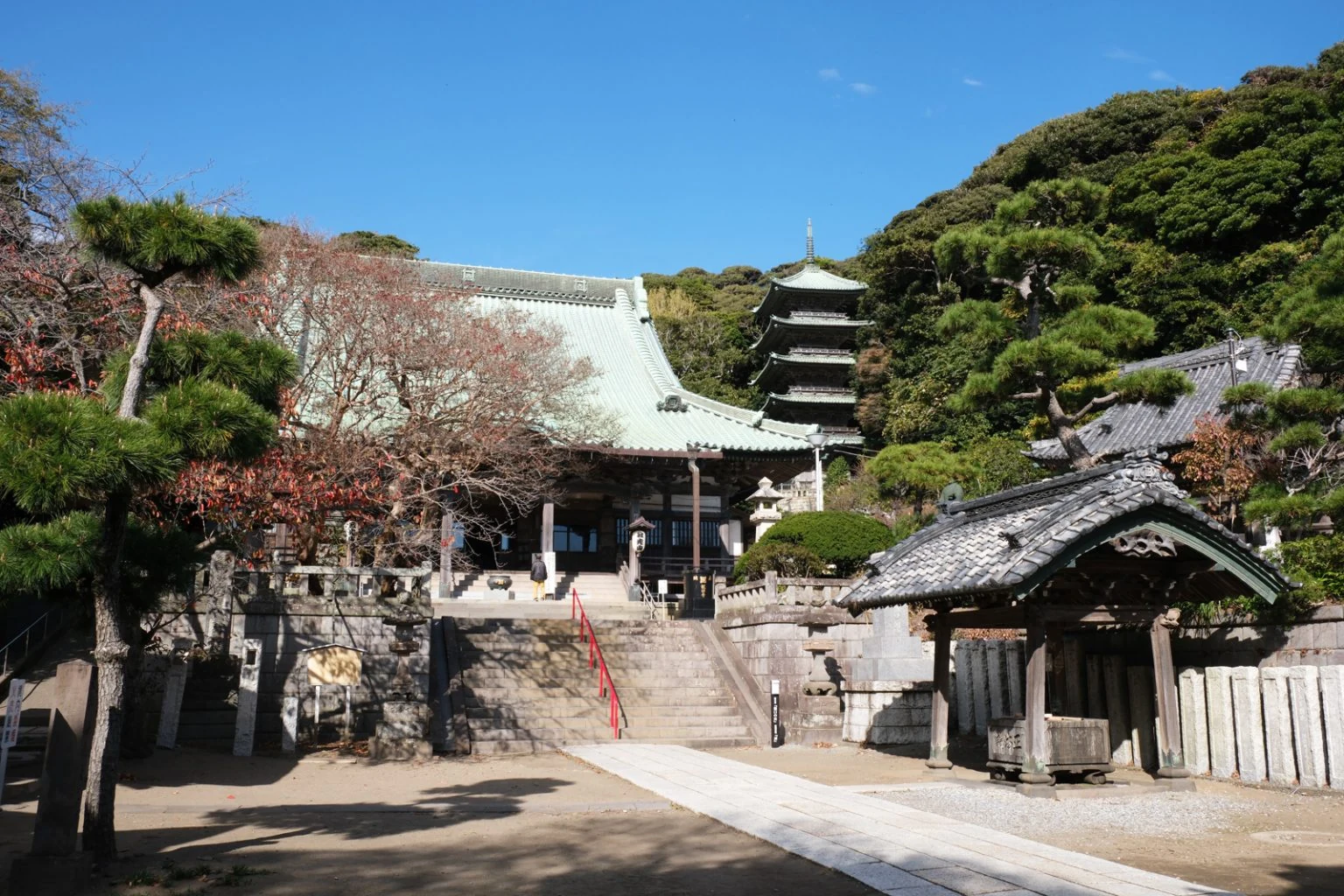
  • Ryukoji Temple

    An old temple in Katase that you can visit before crossing to the island, beside streets where Enoden trains pass.

    Visiting
    Usually 9:30–16:00, using the hours listed on the temple’s access page.
    Closed days
    General visits have no fixed day off; Buddhist services may adjust indoor viewing hours.
    Admission
    Free on temple grounds
    Reservations
    General visits do not require advance booking.
    Suggested visit length
    30–45 minutes (editor's recommendation)
    Planning your visit

    First visit the main hall and the bell tower, then proceed to the five-storey pagoda according to your physical condition. The official website's FAQ also mentions the bell tower operating hours from 9:30 to 16:30, so to avoid arriving late and missing the main service period, it is recommended to complete your visit by 16:00; on-site guidance from the temple takes priority.

    Sources
    Ryukoji Temple temple grounds' main hall, five-story pagoda, and skyward view
    Ryukoji Temple temple grounds' main hall, five-story pagoda, and skyward view© 江ノ島電鉄・小田急電鉄/江の島・鎌倉ナビ ↗
  • Katase-Enoshima Station · Dragon Palace architecture

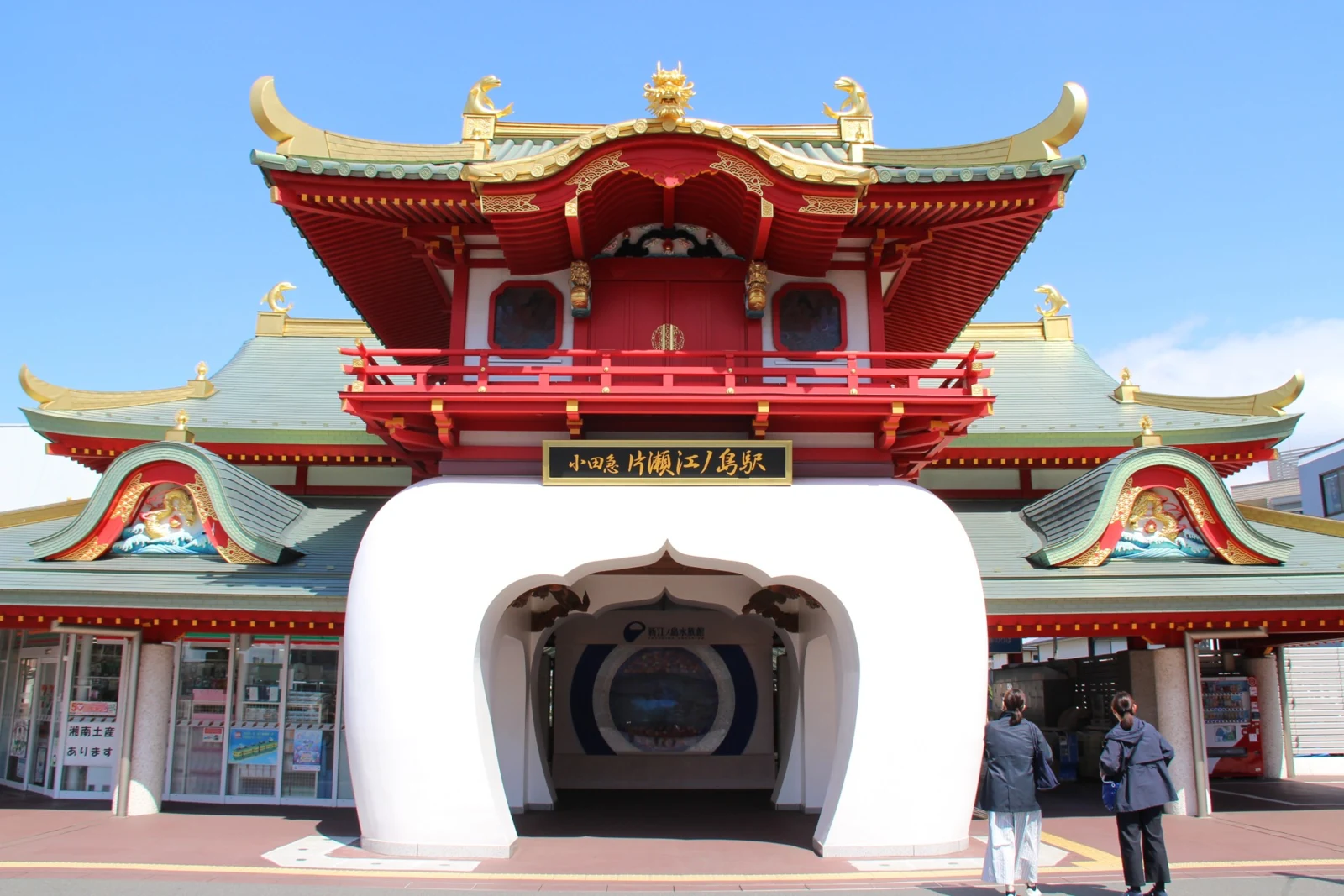
    Cross the small bridge over the Sakai River to see Odakyu’s Katase-Enoshima Station, built in a Dragon Palace style. Combine it with a walk to the aquarium and Katase Coast. Reaching Enoden’s Enoshima Station requires walking between the two stations; this is not a transfer on the same platform.

    Visiting
    The exterior can be admired during daytime walks; when taking the train, please follow the scheduled departure times.
    Admission
    Viewing the buildings outside is free; entry to the paid area requires a valid ticket or applicable admission ticket.
    Closed days
    Train operations and station services follow Odakyu’s timetables and announcements.
    Reservations
    Visits outside the station do not require advance booking.
    Suggested visit length
    10–15 minutes (editor's recommendation)
    Planning your visit

    Group the Dragon Palace-style station building, aquarium and Katase Coast into one mainland walk. This is an Odakyu station, separate from Enoden’s Enoshima Station. Check the railway company and direction of travel before heading for a train, rather than discovering you are at the wrong station.

    Sources
    Katase-Enoshima Station’s new Dragon Palace-style building, dolphin roof ornaments and front entrance
    Katase-Enoshima Station’s new Dragon Palace-style building, dolphin roof ornaments and front entrance© 藤澤市觀光協會 ↗
  • Shonan-Enoshima Station • rooftop terrace

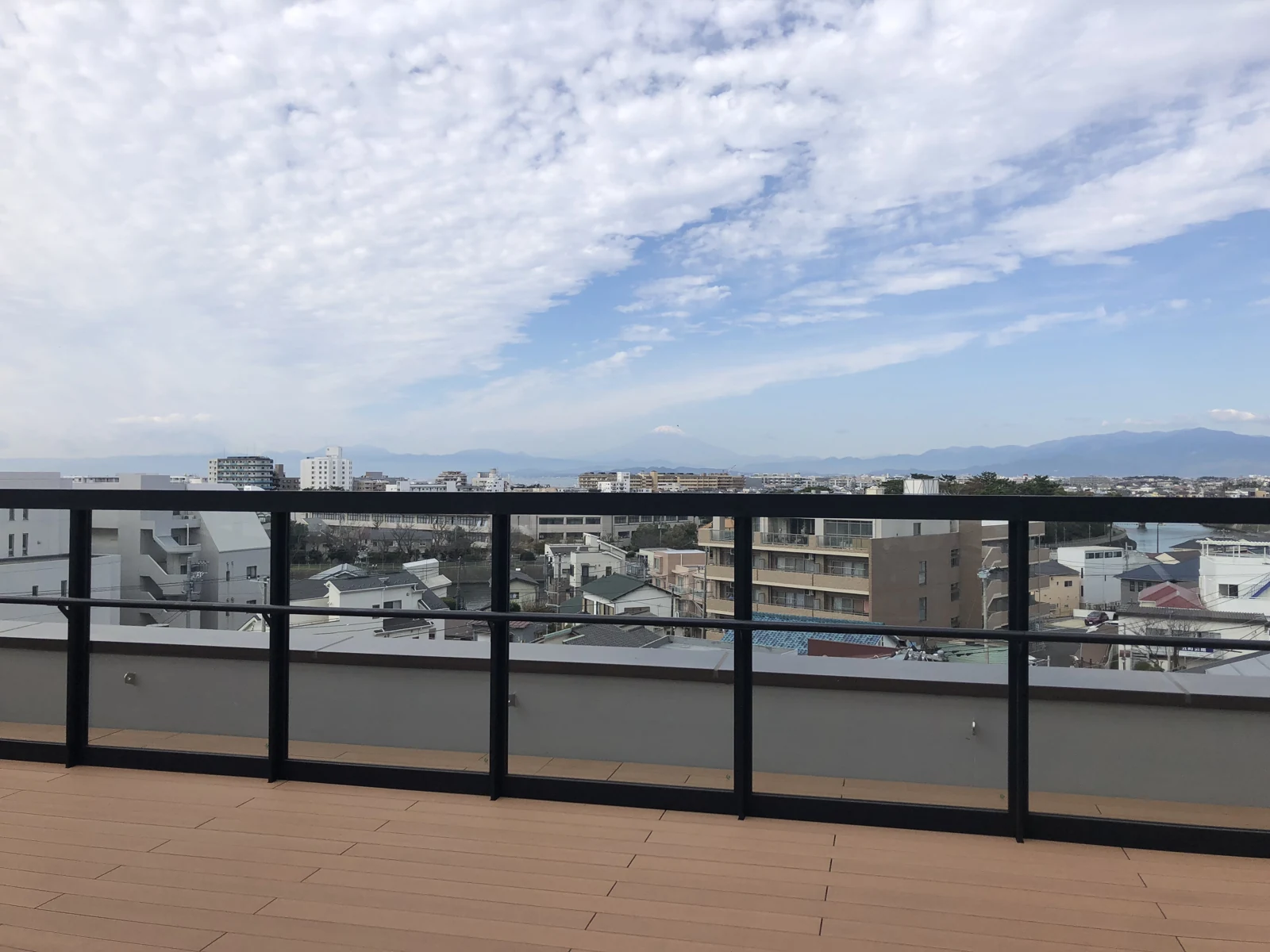
    Before visiting Enoshima, visitors can first go to the rooftop terrace on the fifth floor of the Shonan Monorail Station, from where they can take in views of the neighborhood, coastline, and distant mountain ridges, then return to the street and stroll through Enoshima.

    Access hours
    An existing official notice lists access from the first train until 23:00. Construction, cleaning or poor weather may cause closures.
    Admission
    The rooftop terrace does not require a separate viewing ticket; additional fare for the monorail is charged separately.
    Closed days
    No fixed closing day; temporary closures will depend on station schedule
    Reservations
    General visitors do not need to make a reservation.
    Suggested visit length
    15–25 minutes (editor's recommendation)
    Planning your visit

    Take the elevator to the fifth floor, then view the area facing Mount Fuji and the city before heading to the island; when the sky is clear, it's easier to identify distant mountains than in the evening when fog tends to rise. Operating hours are based on the still-published 2018 official announcement and are not the new system scheduled for 2026; do not assume the terrace is always accessible when the facility is closed on-site.

    Sources
    Before crossing to the island, survey the landscape from the monorail station’s fifth floor

    Shonan Monorail’s Shonan-Enoshima Station on the mainland has a rooftop terrace on the 5th floor, overlooking Fujisawa’s streets, Sagami Bay and distant mountain ridges. Mount Fuji may be visible in clear weather. Construction, cleaning or poor weather can temporarily close the terrace. If the sky is clear and you have time, go up to find your bearings, then return to street level for Ryukoji Temple and Subana-dori before walking to the island.

    Sources
    Rooftop terrace at Shonan-Enoshima Station looking toward the urban landscape, mountain scenery, and distant Mount Fuji
    Rooftop terrace at Shonan-Enoshima Station looking toward the urban landscape, mountain scenery, and distant Mount Fuji© 湘南モノレール ↗

Ryukoji Temple and the two distinctive station buildings are on the mainland. If island attractions are your main focus, plan with the map above first, then extend the walk on the return journey if you have enough energy.

Map

TASTE THE NEIGHBOURHOOD

This stop, worth lingering for a taste.

Next stop, a different sea breeze.

Back to Kamakura’s three chapters